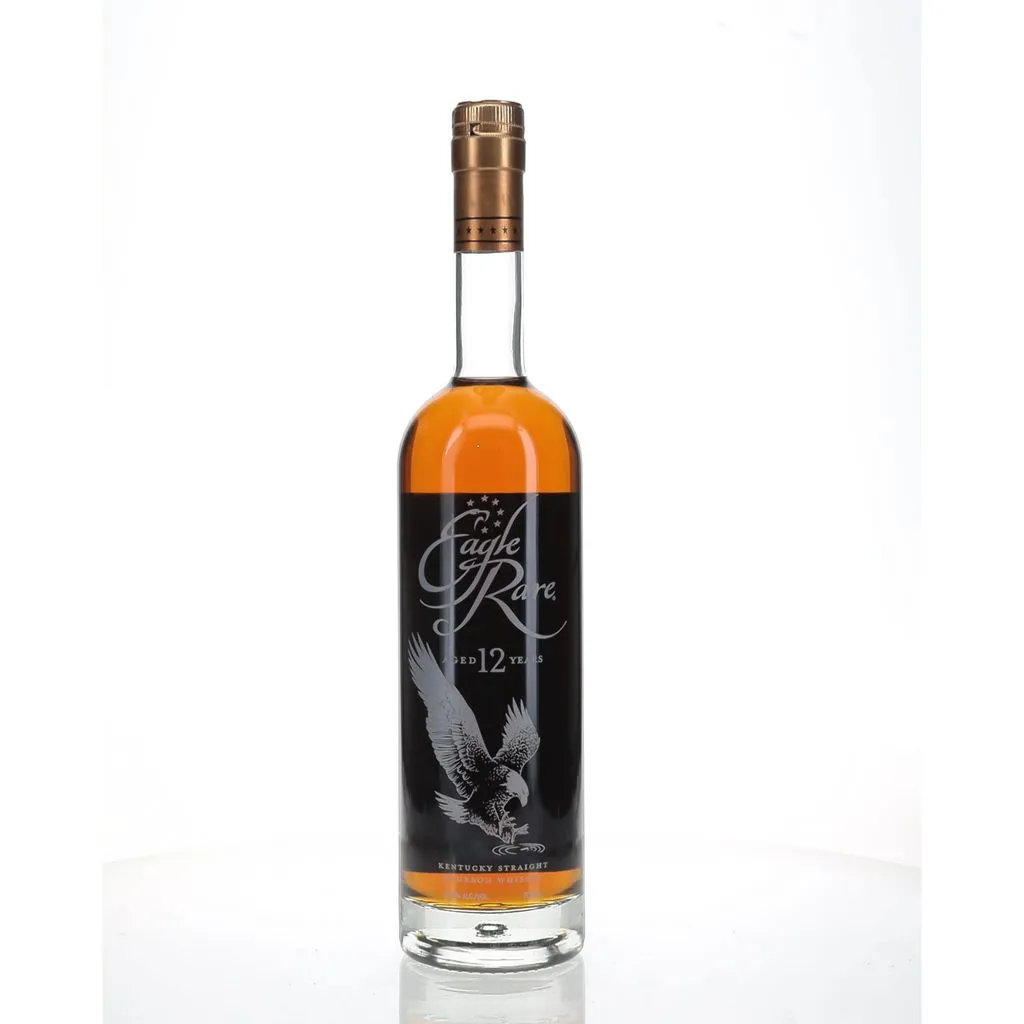
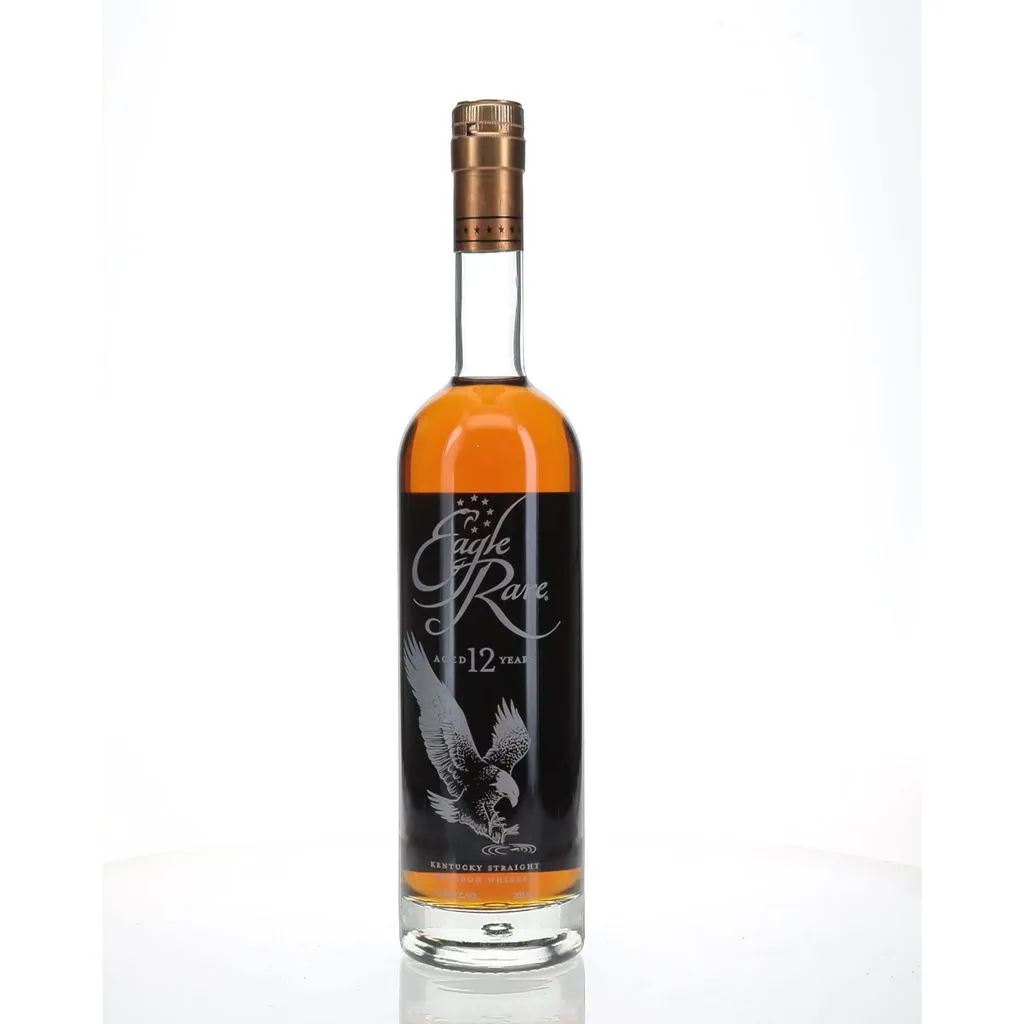
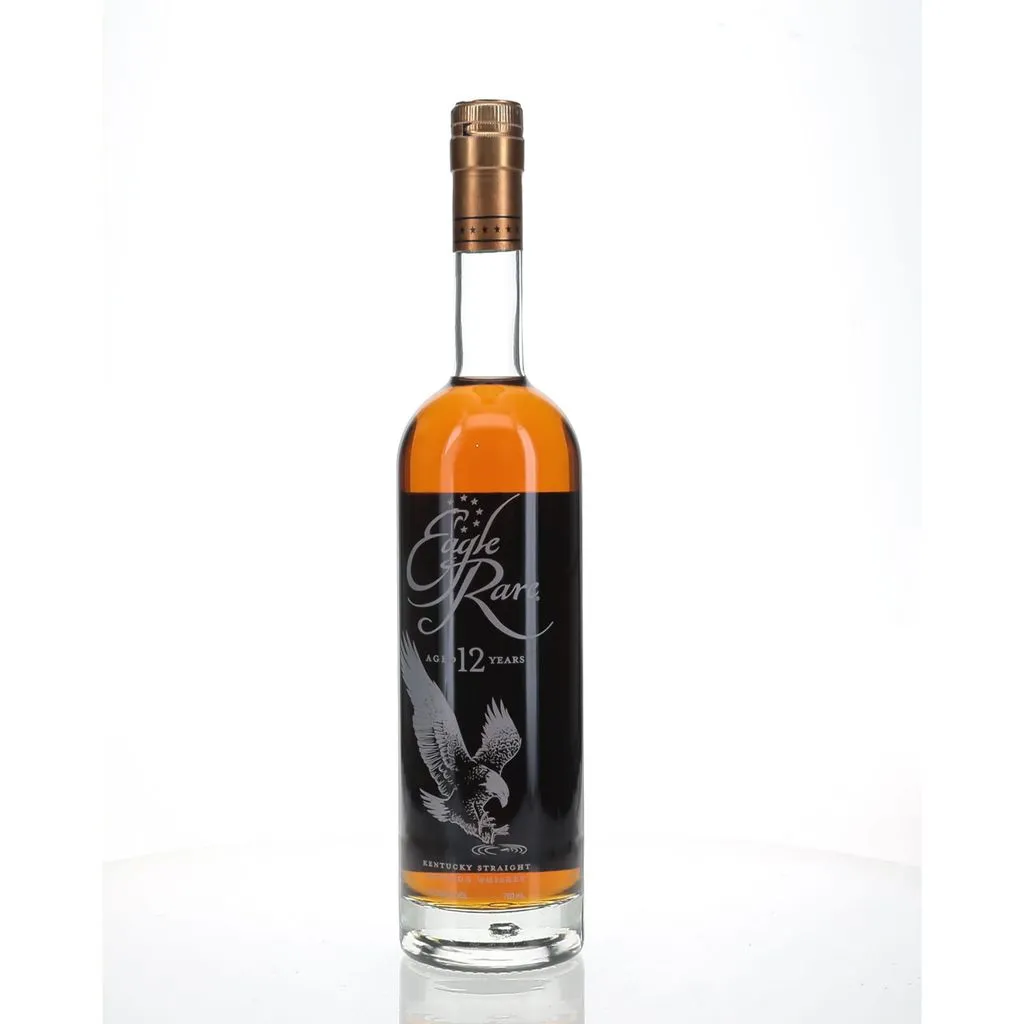
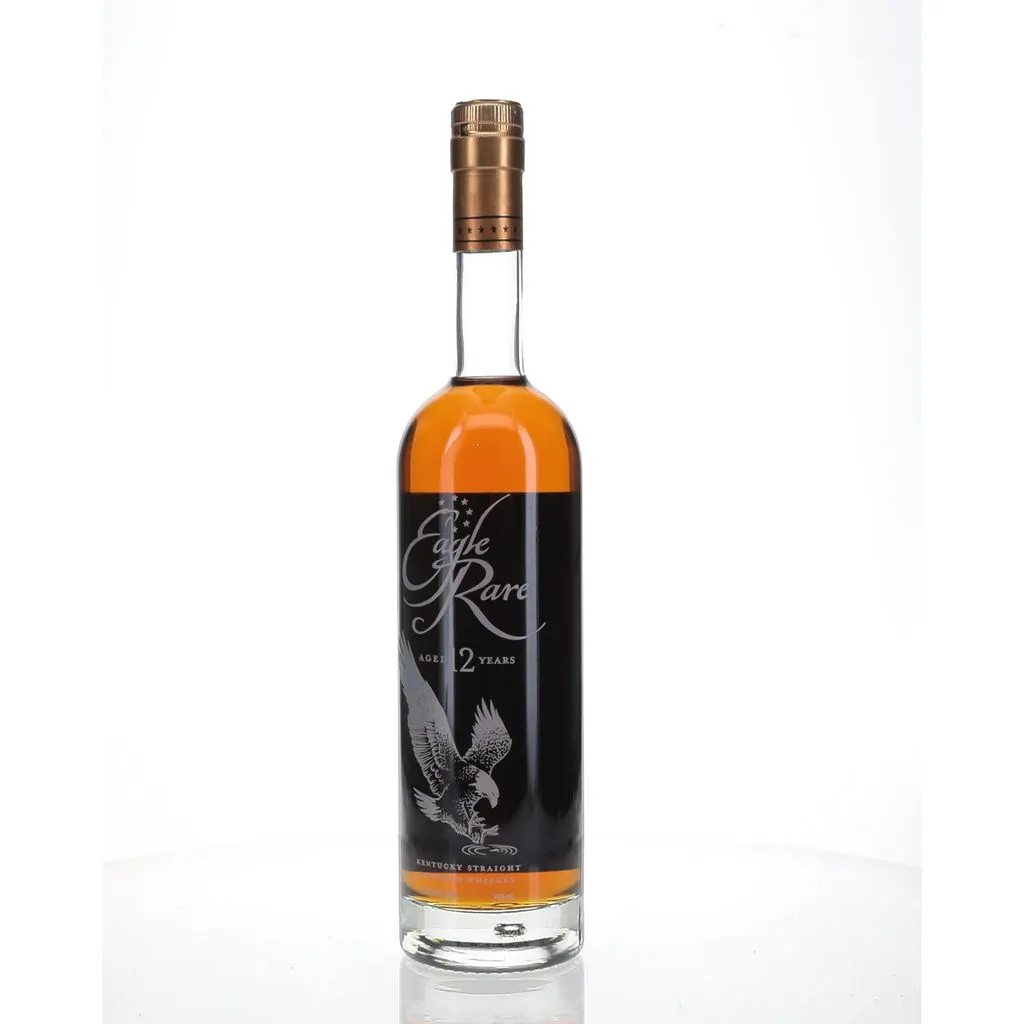
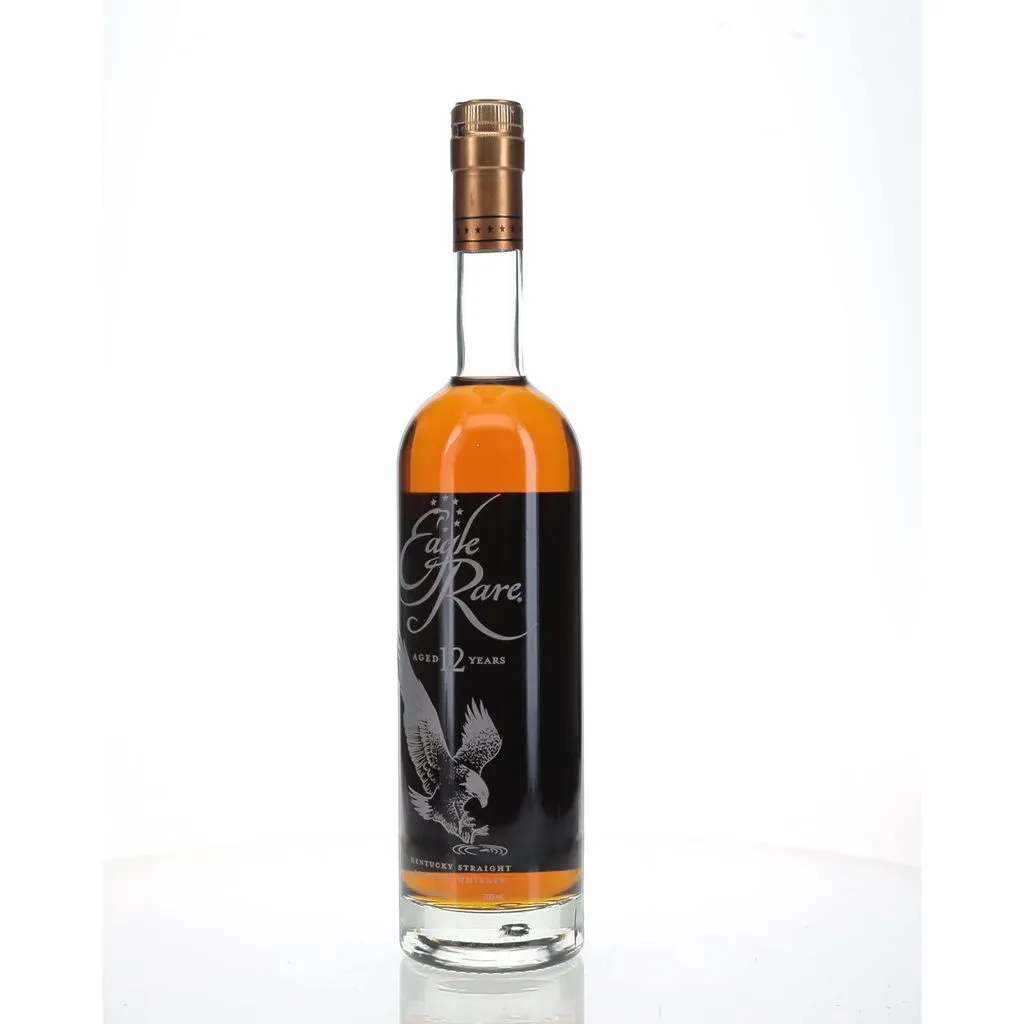
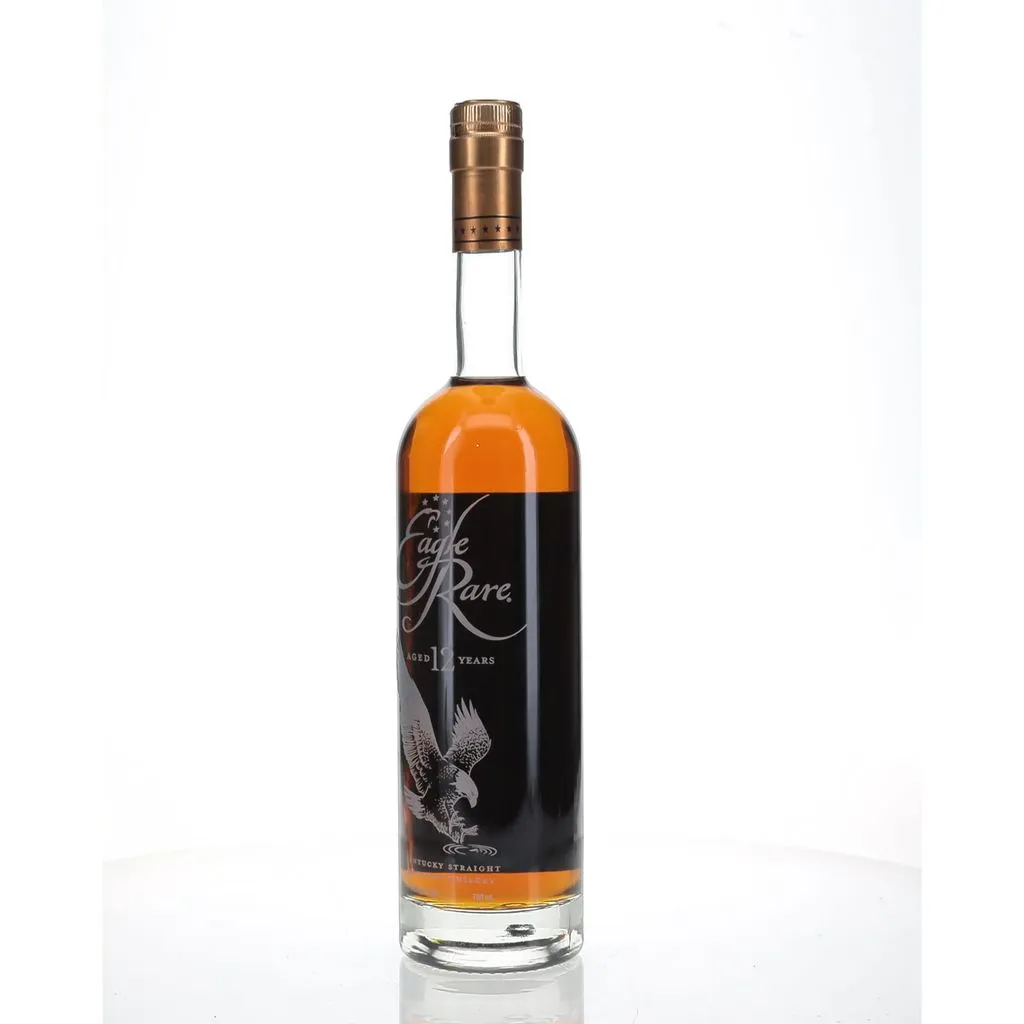
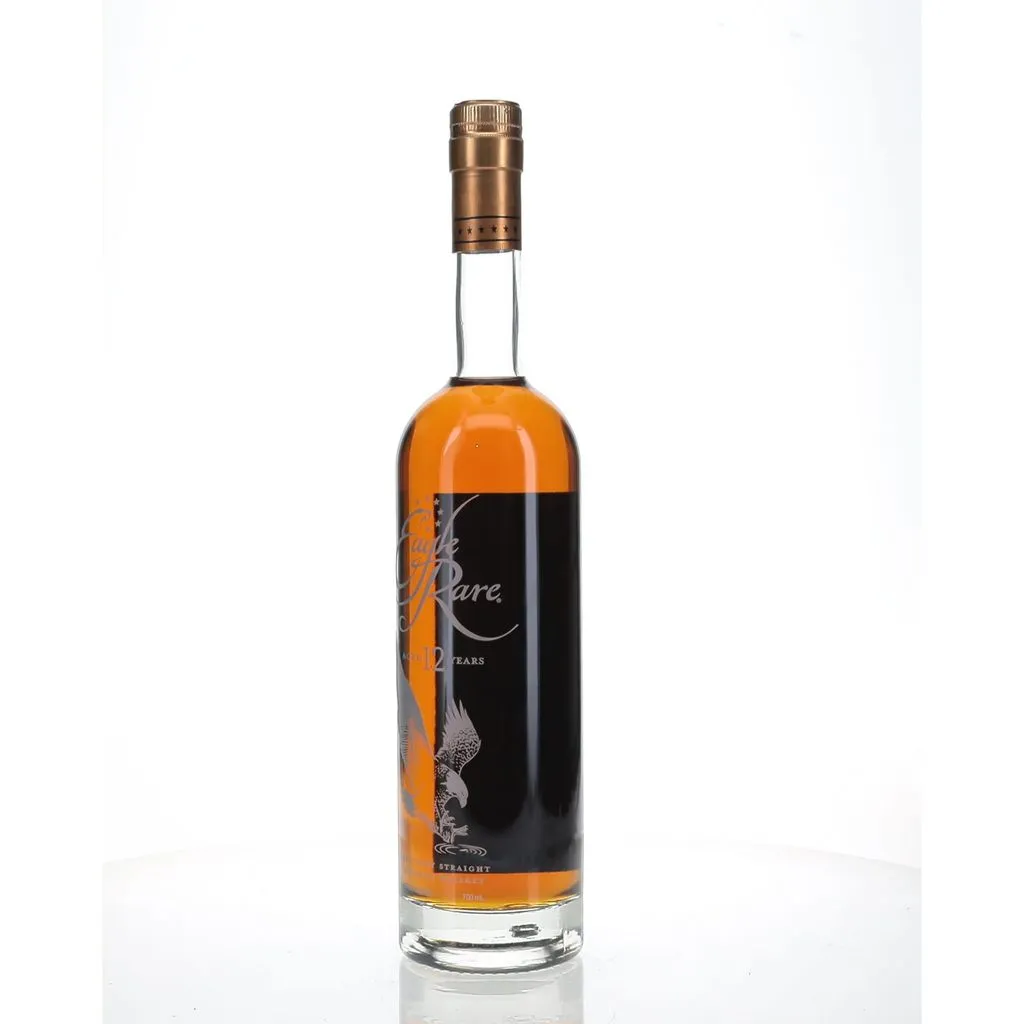
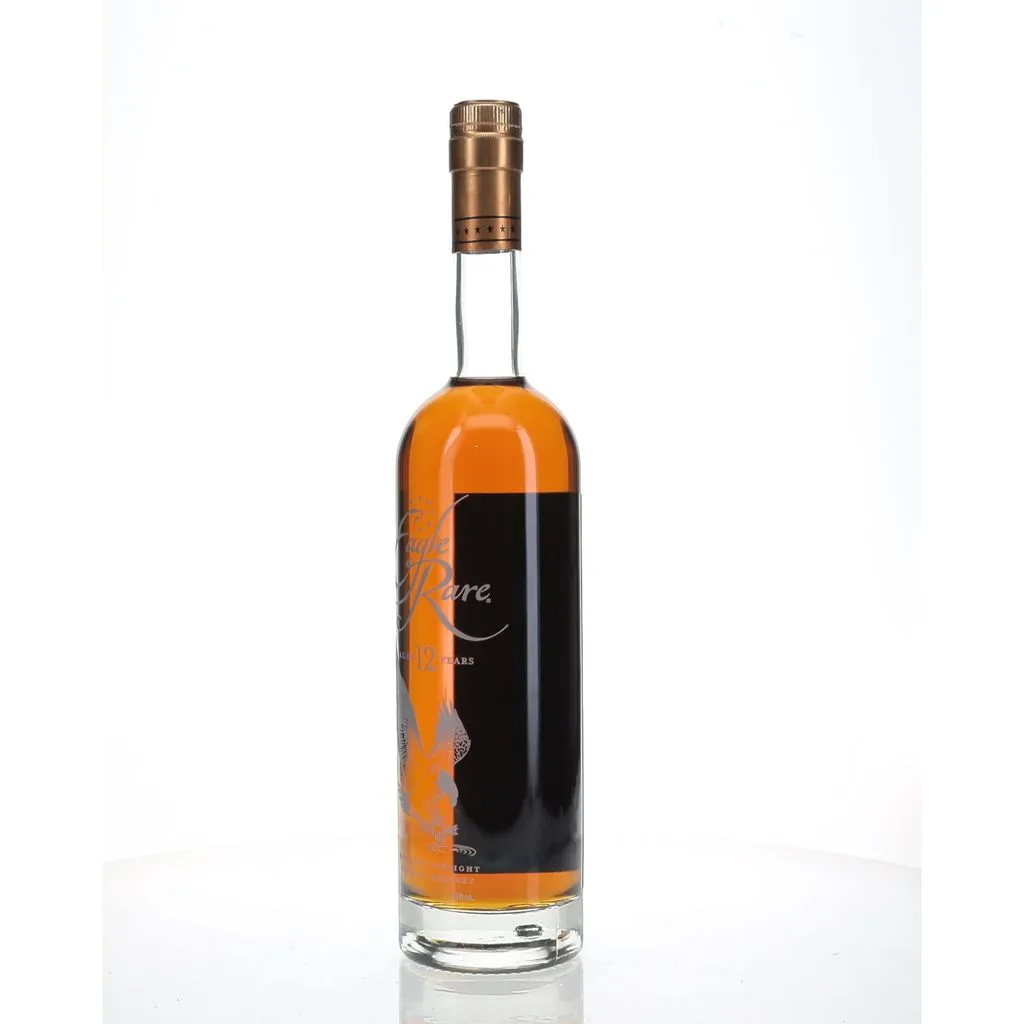
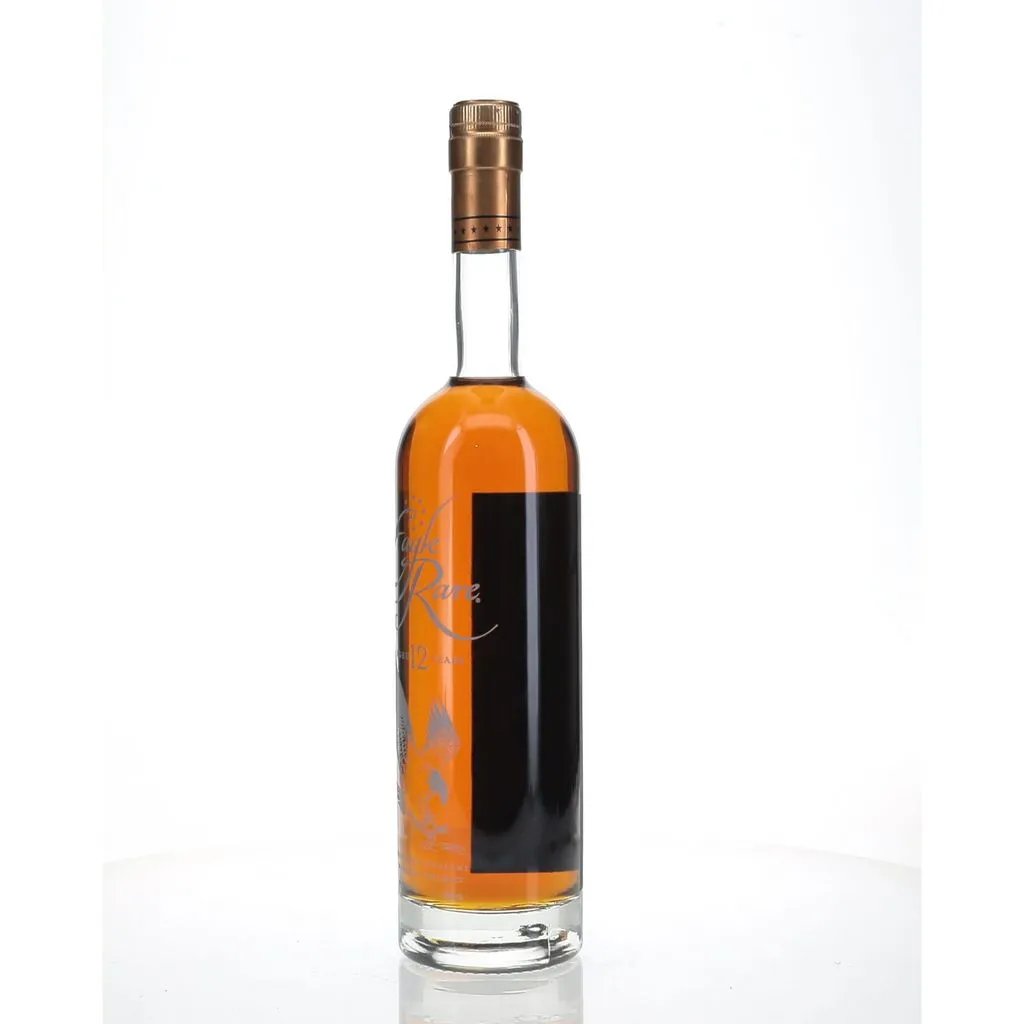
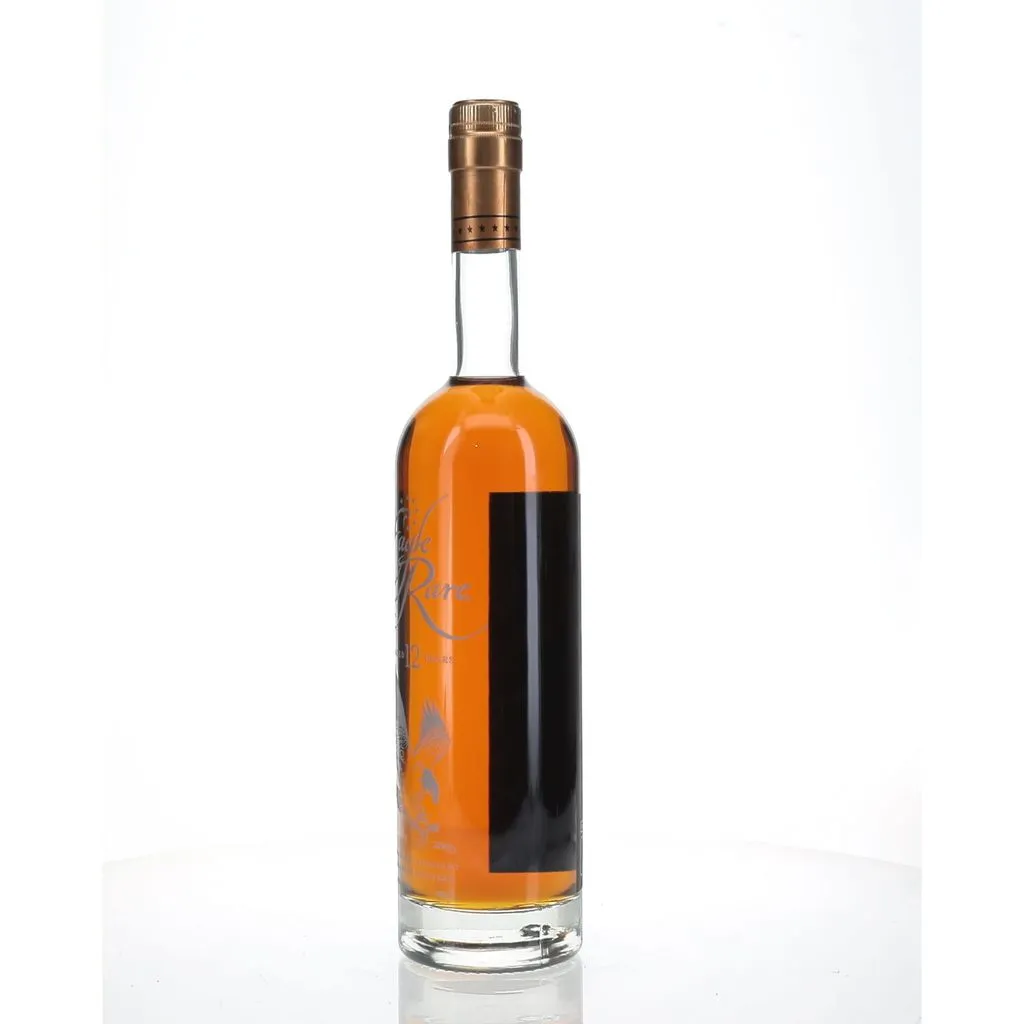
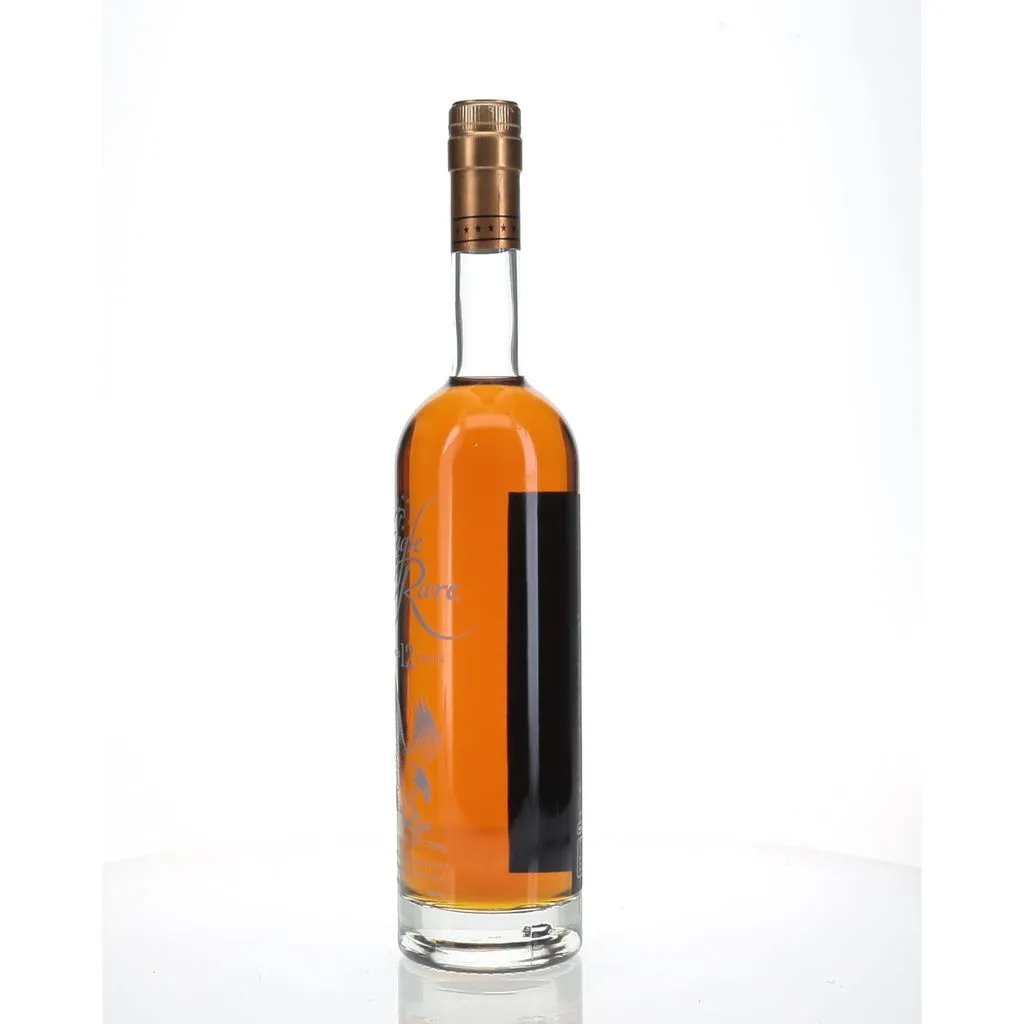
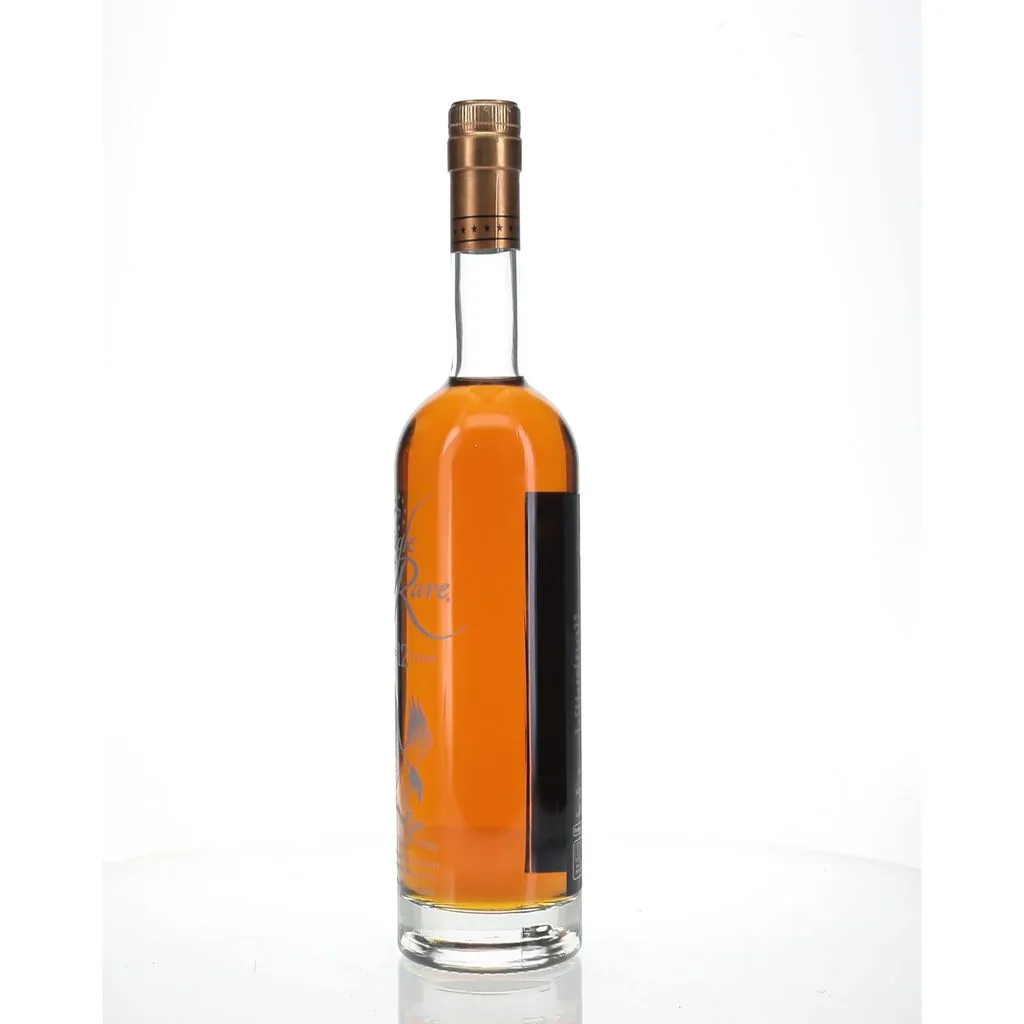
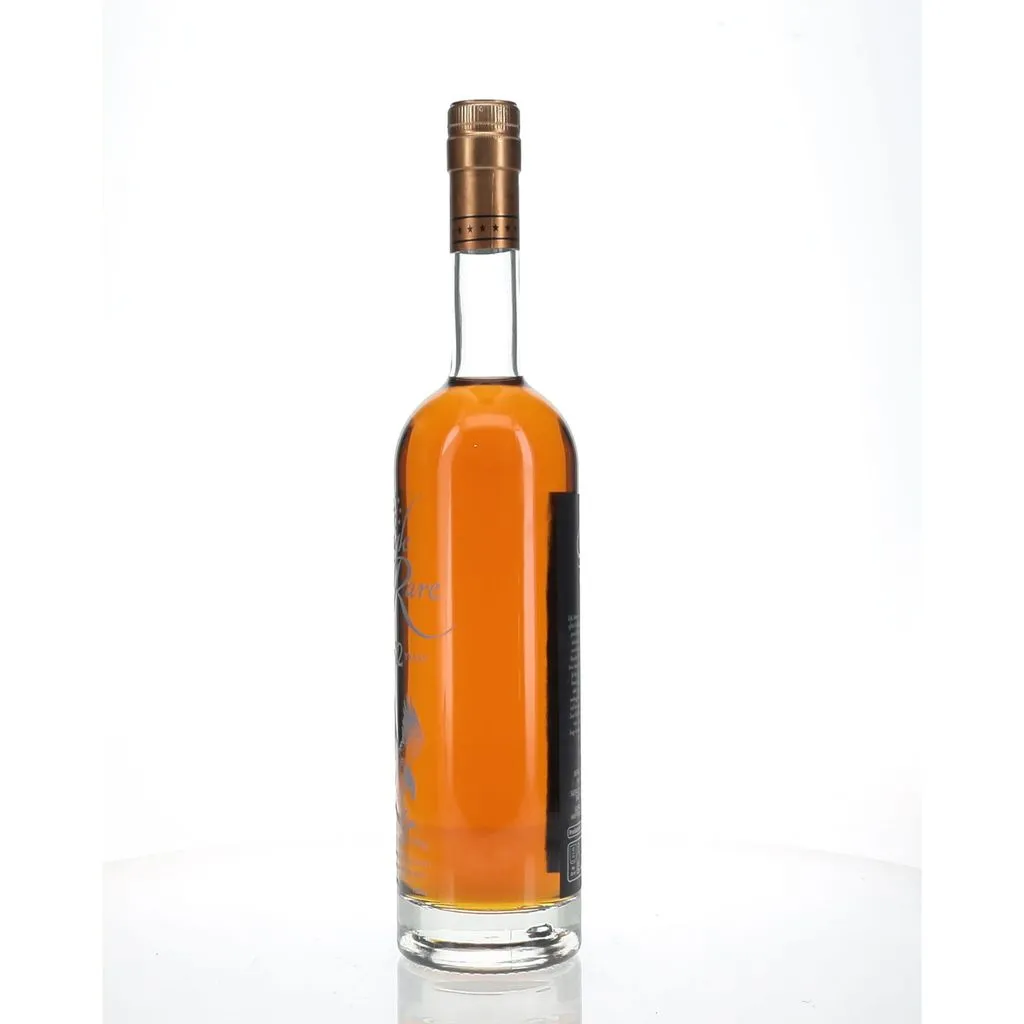
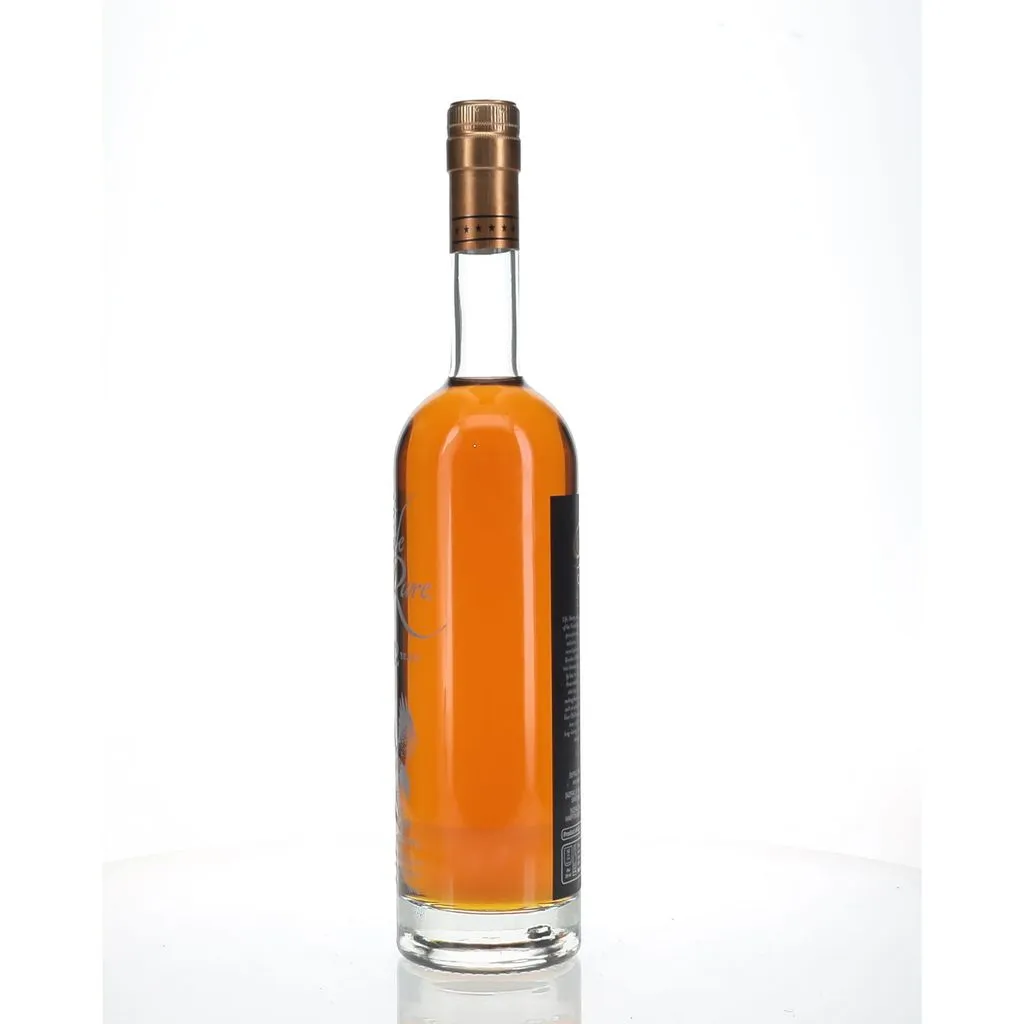
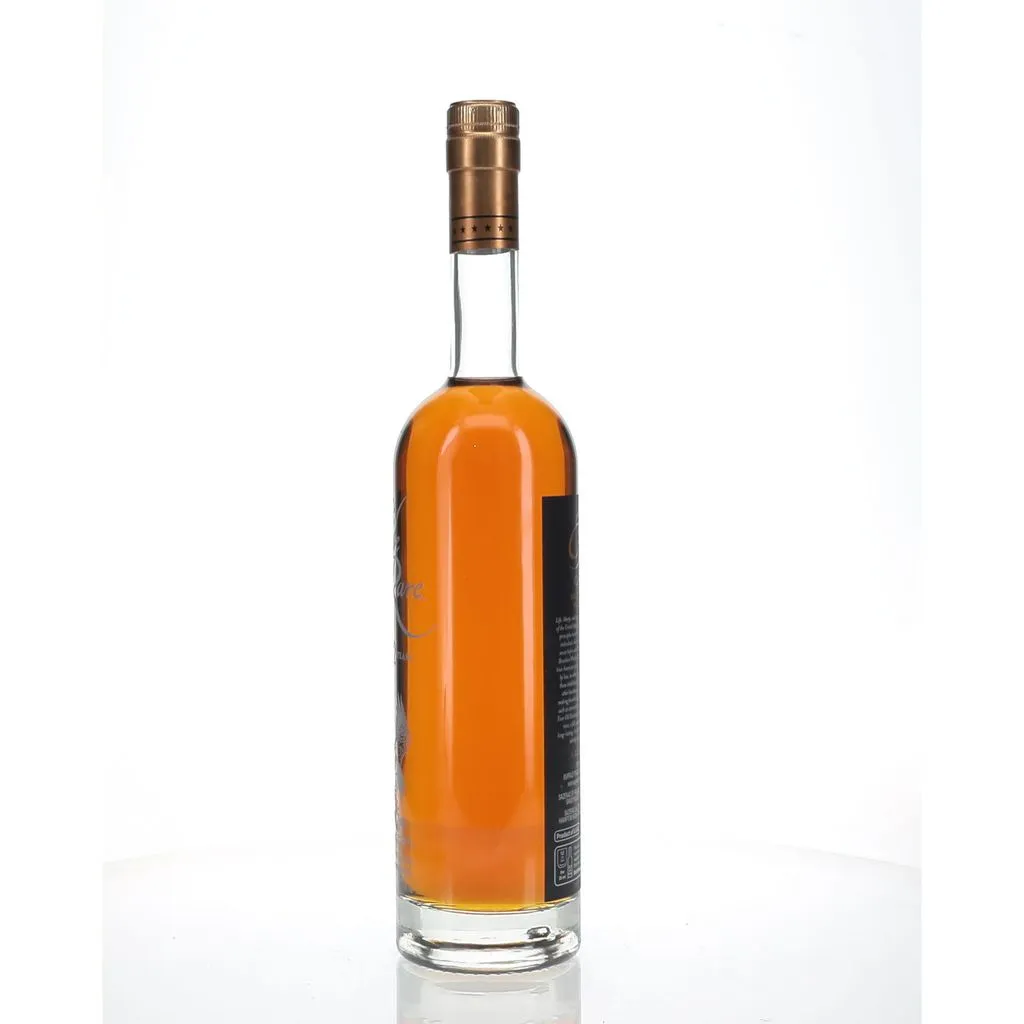
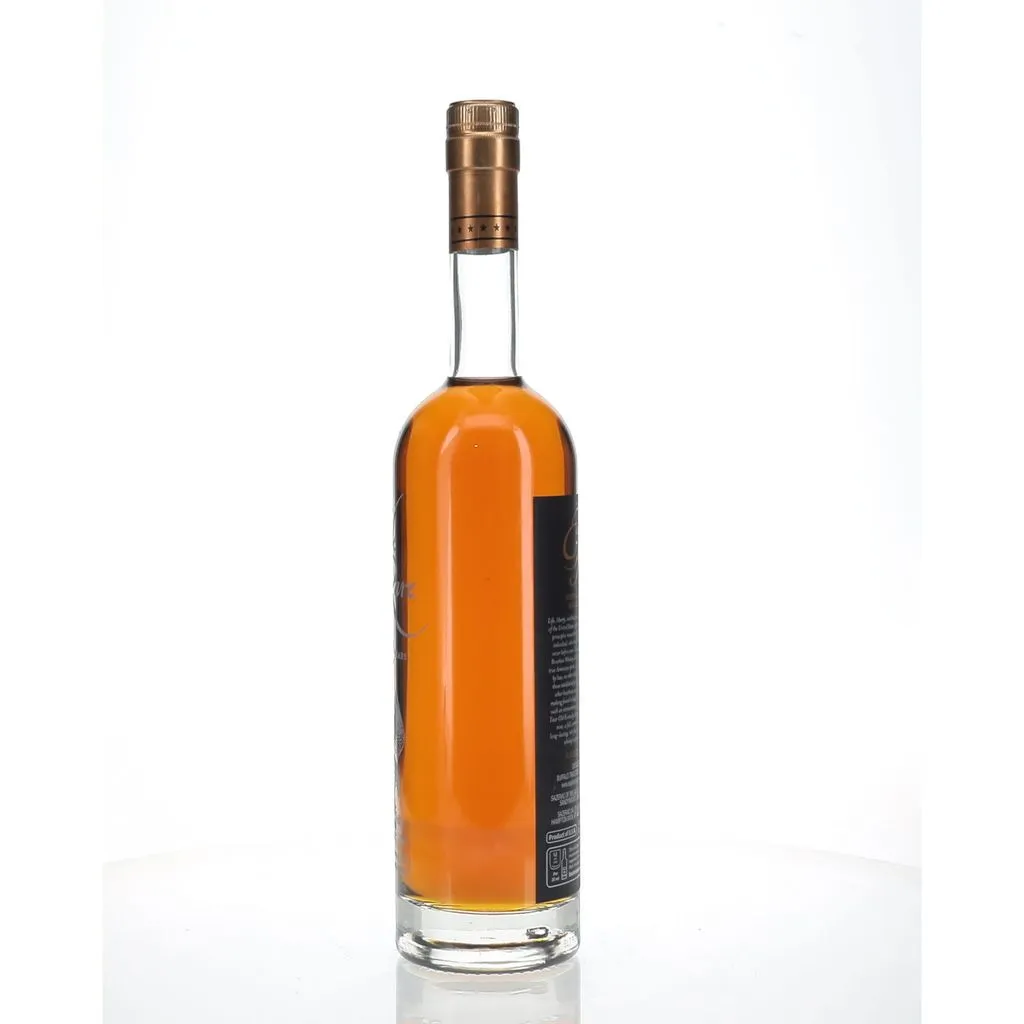
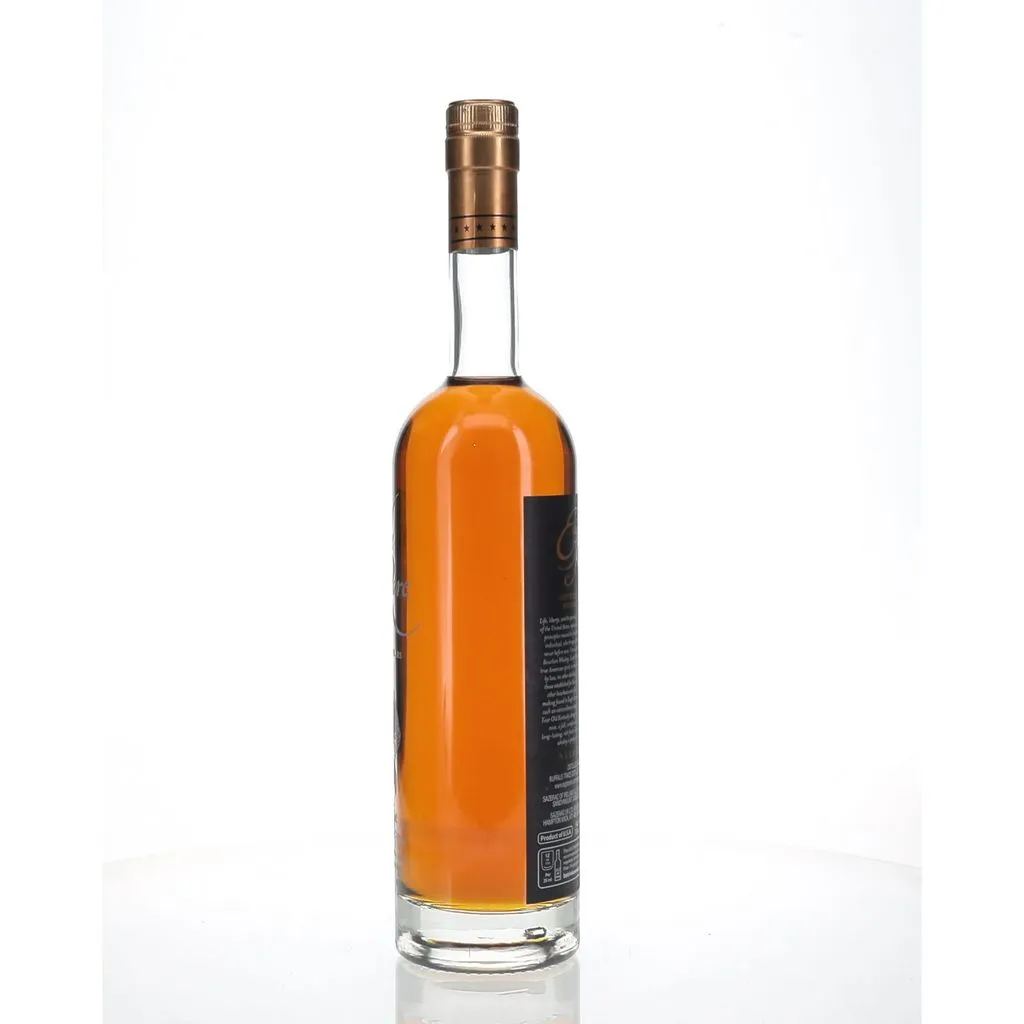
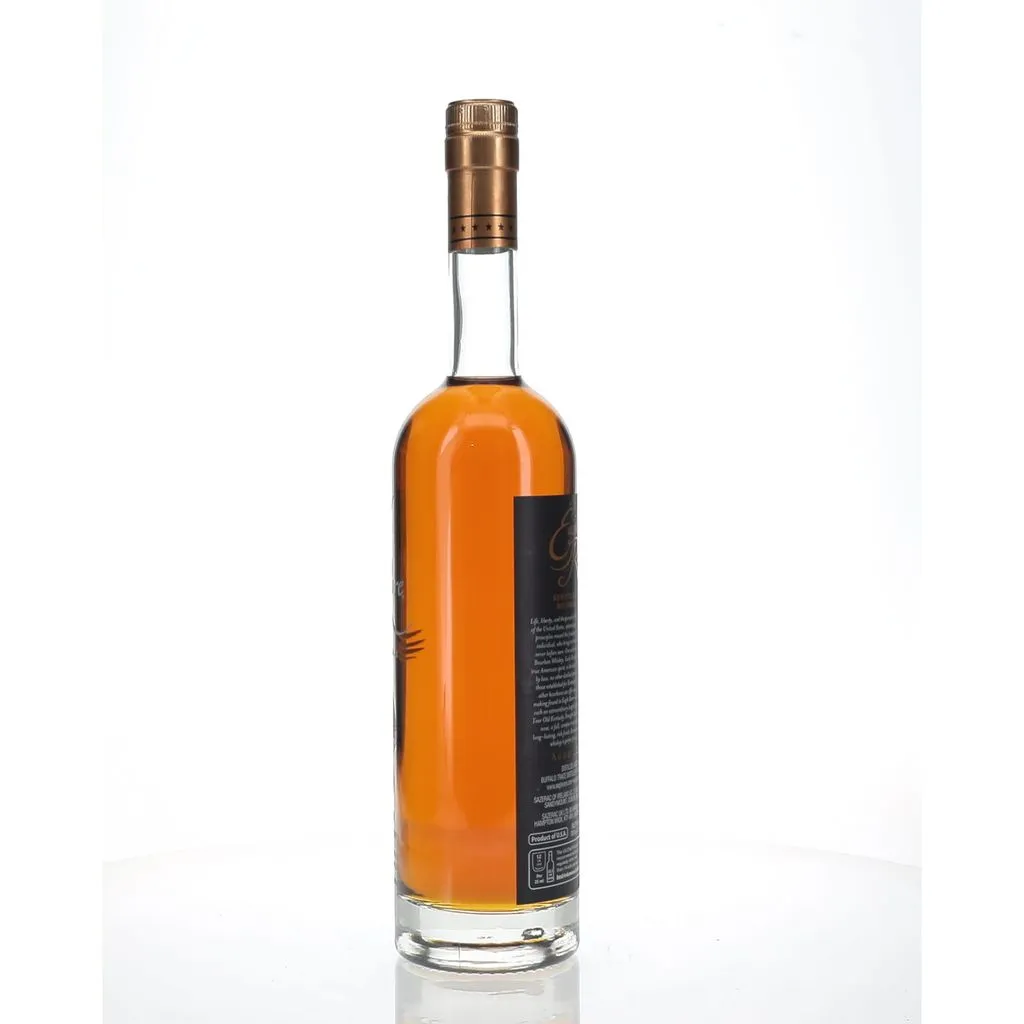
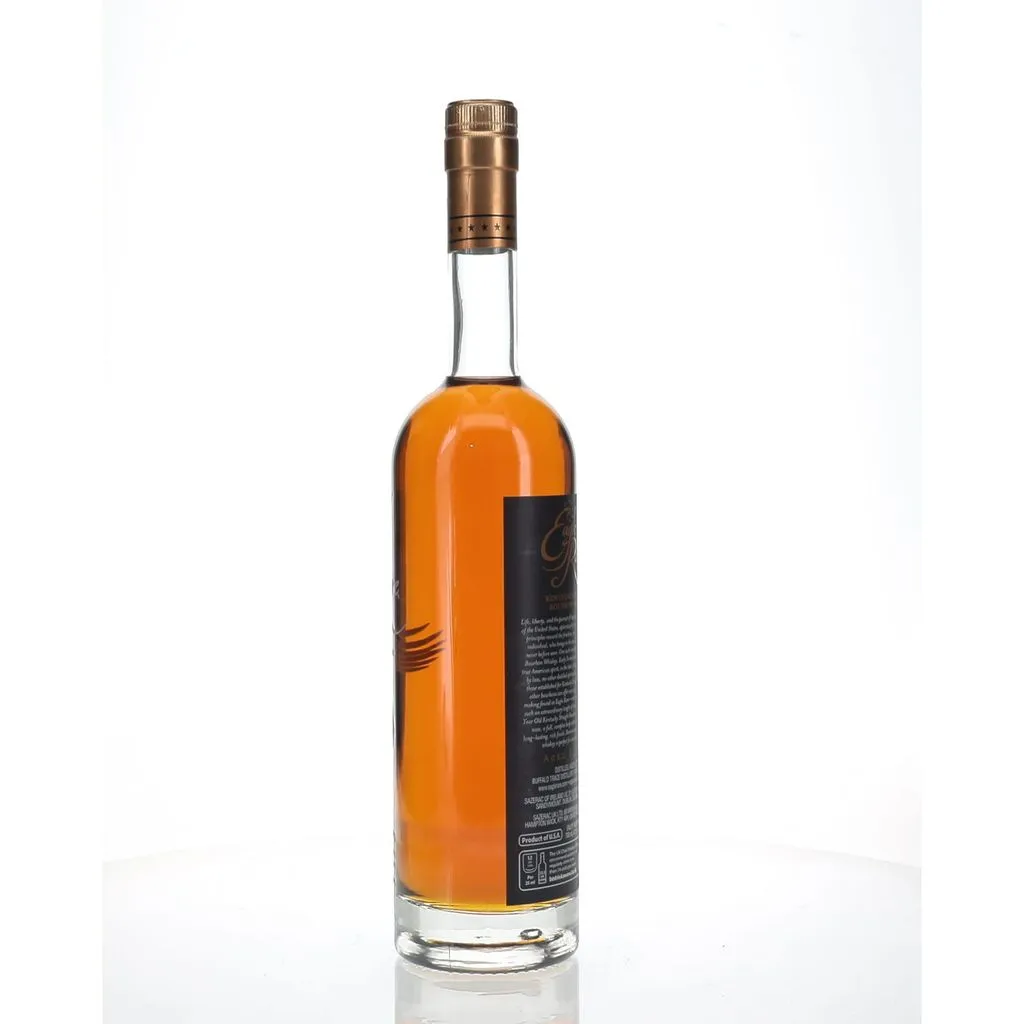
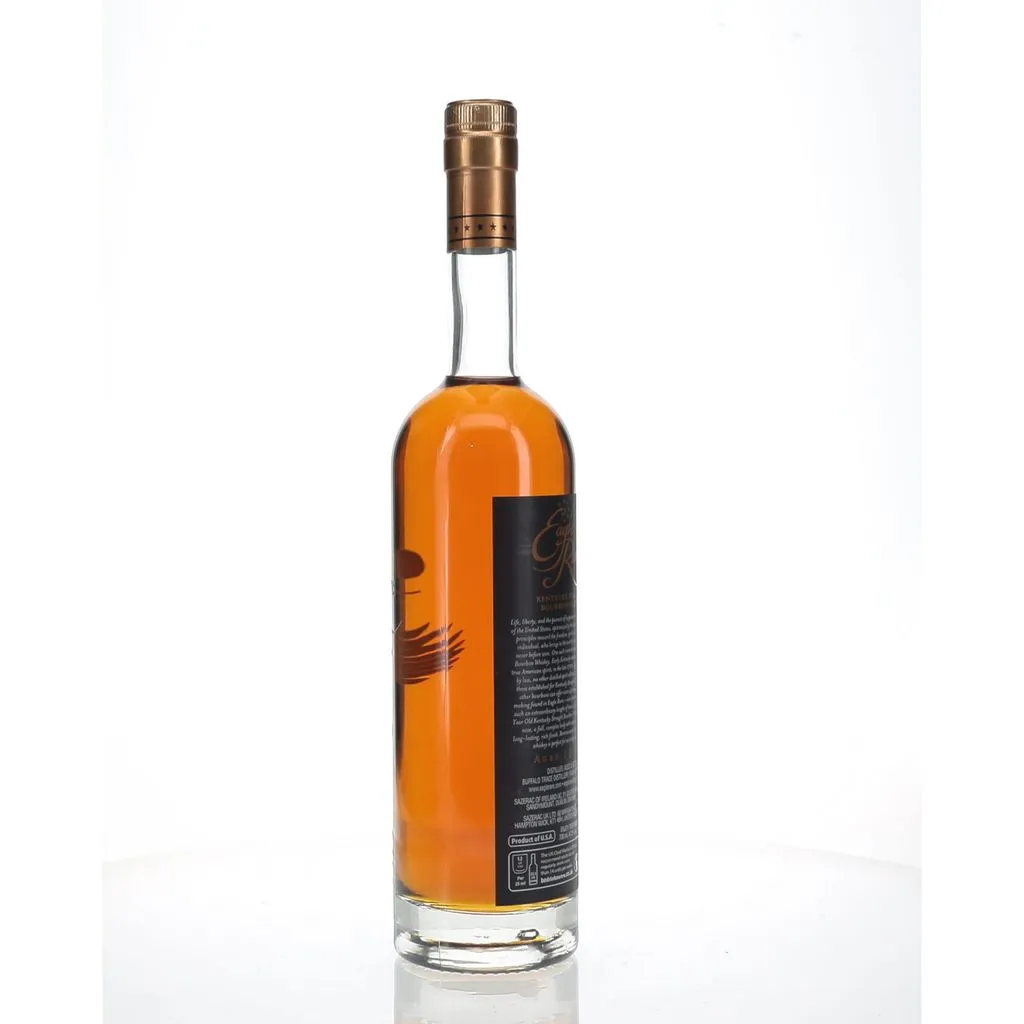
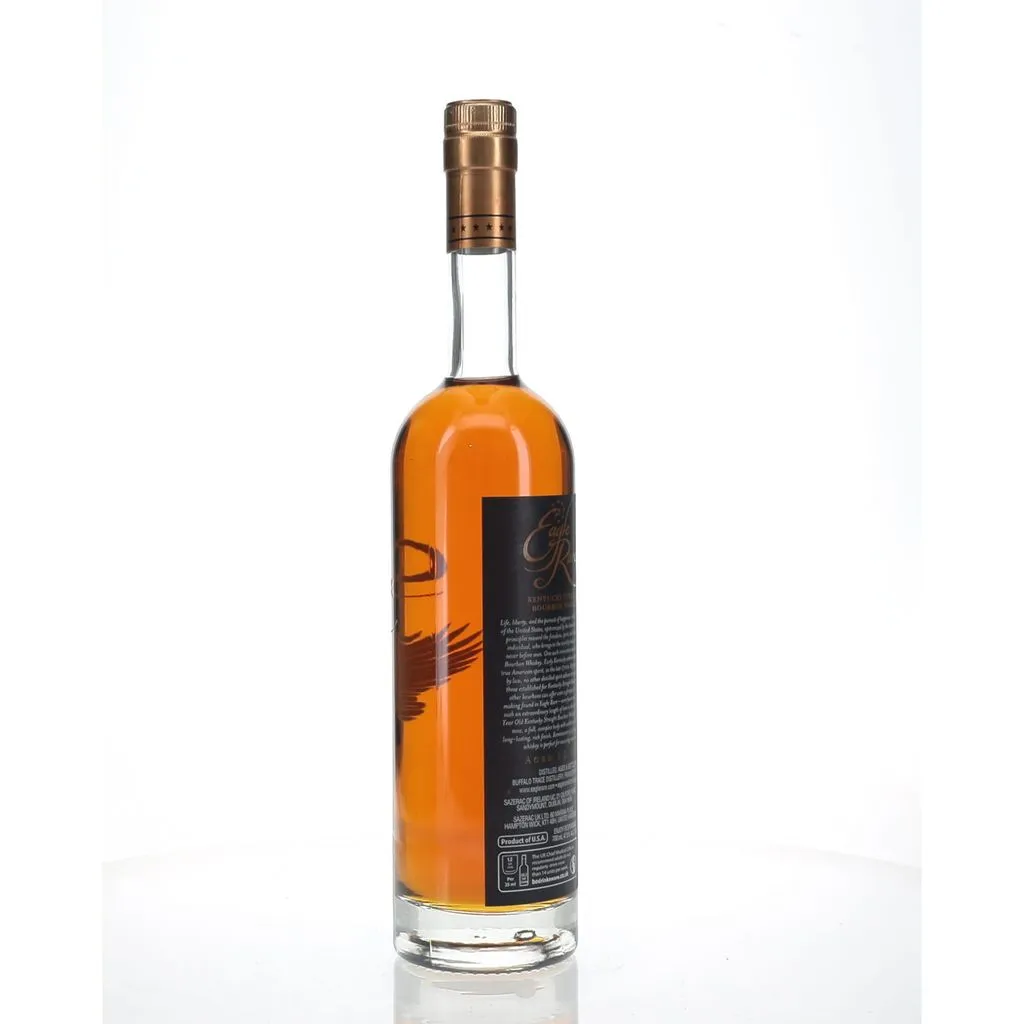
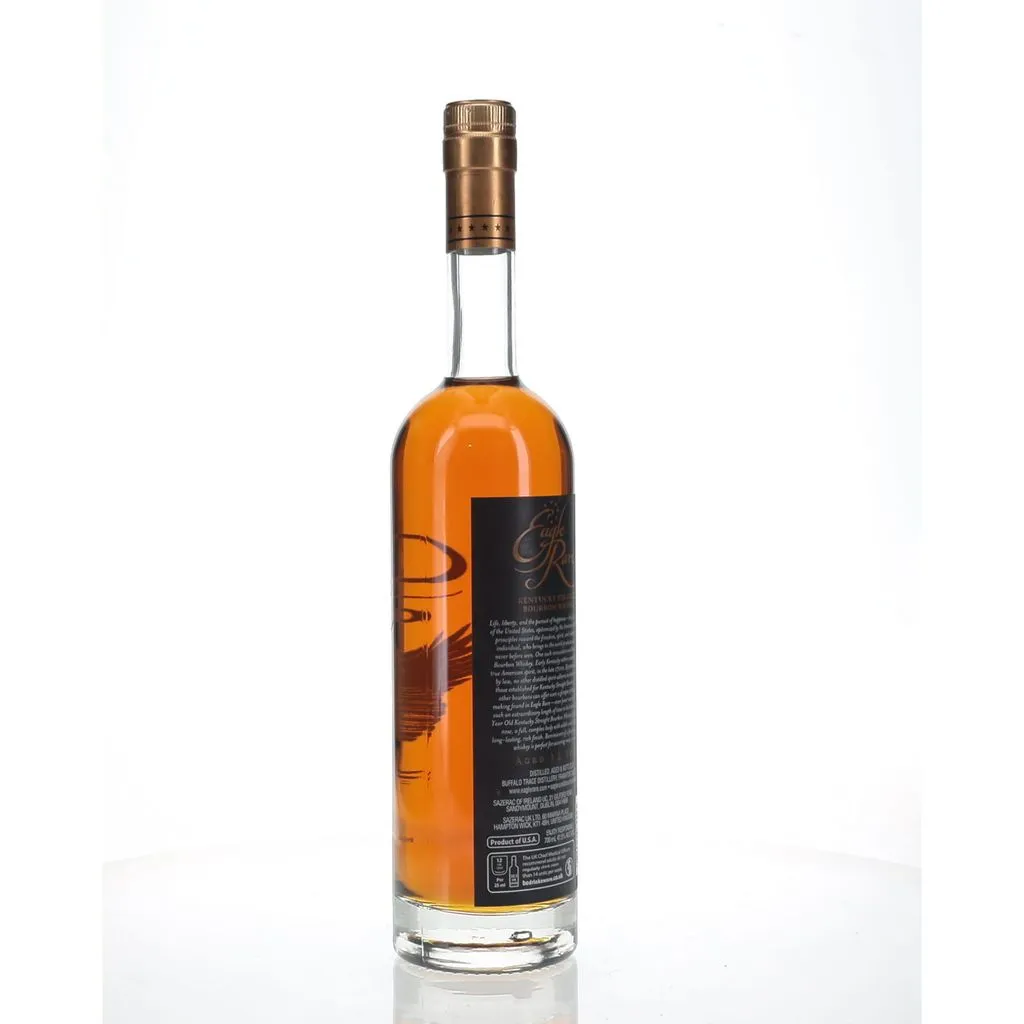
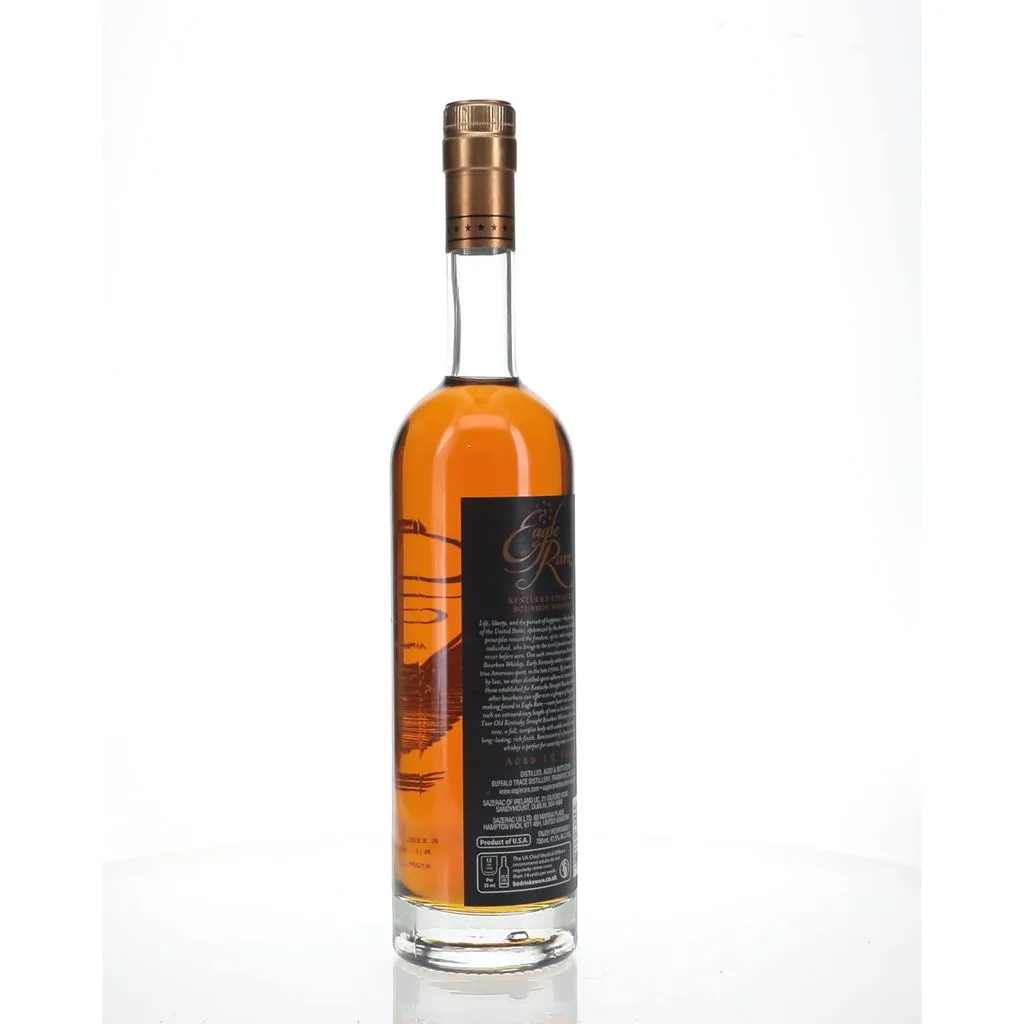
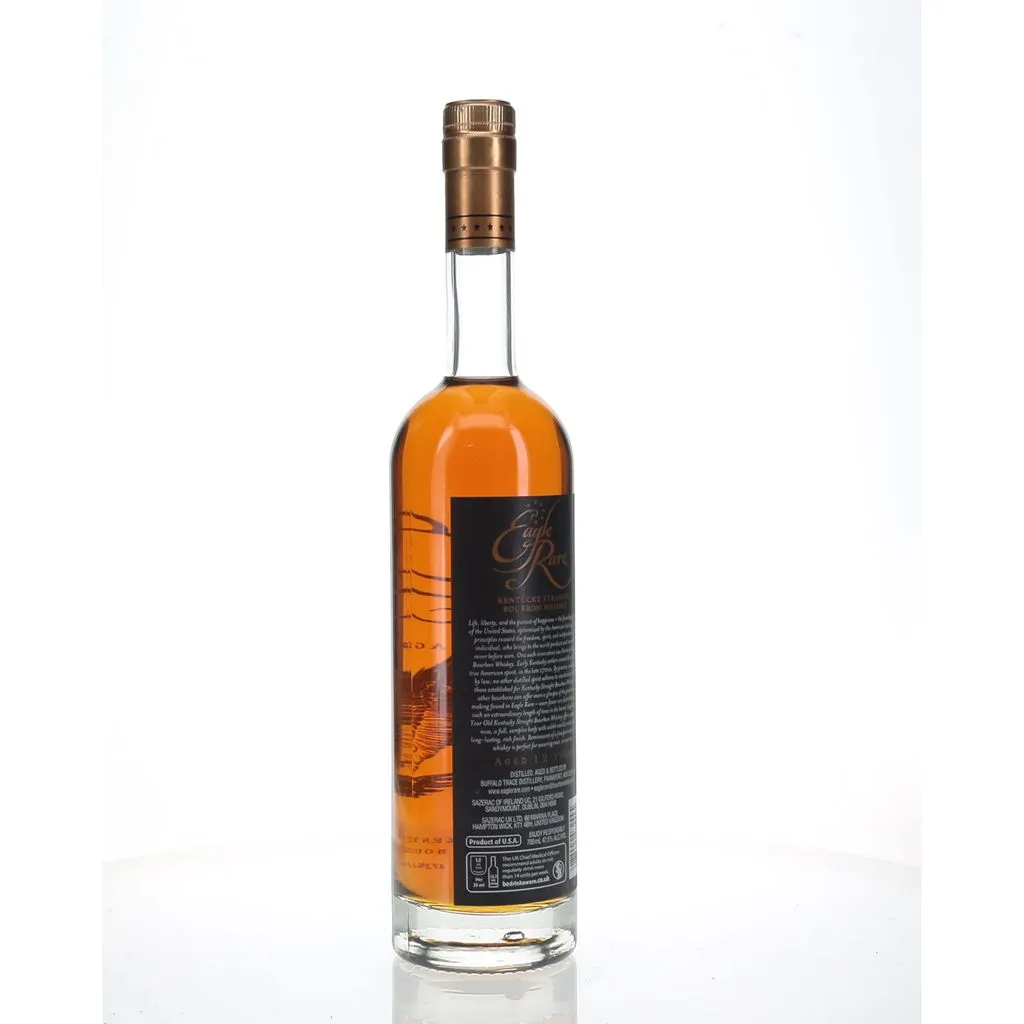
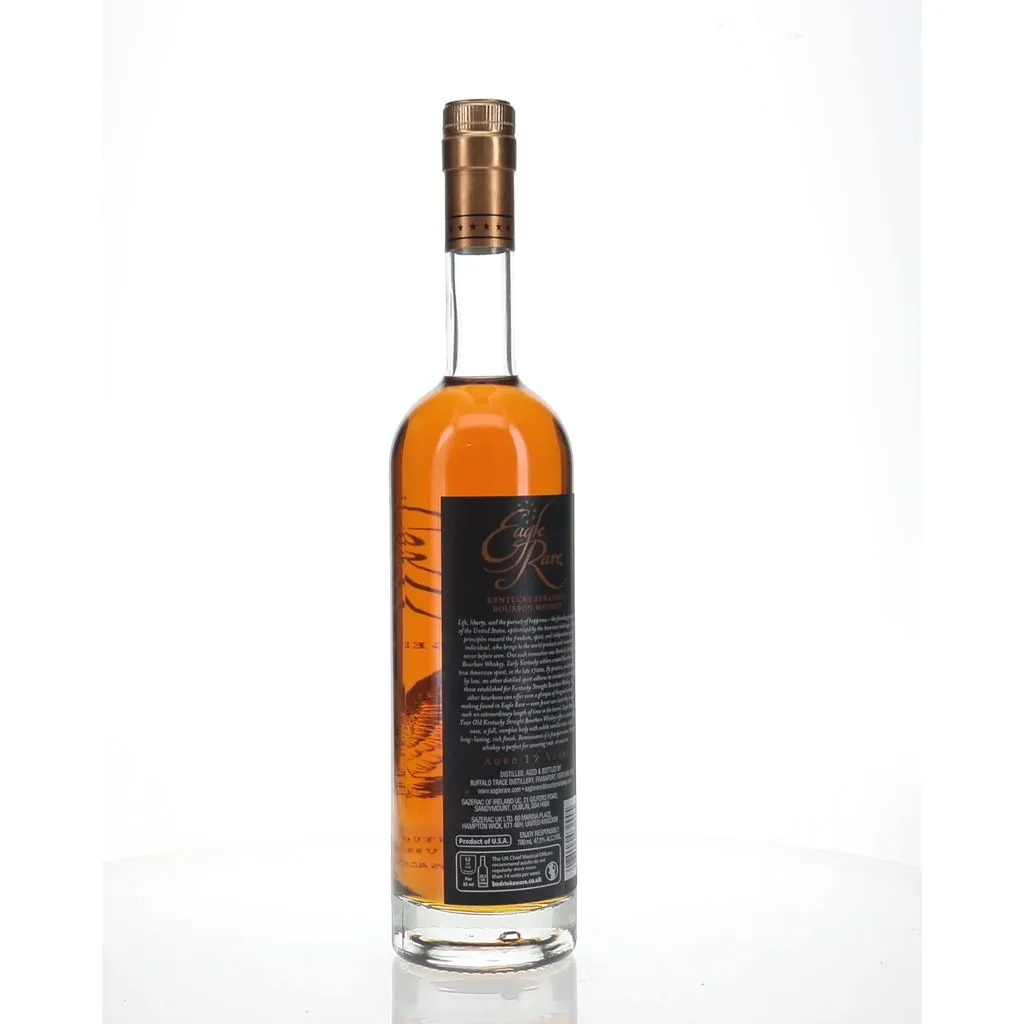
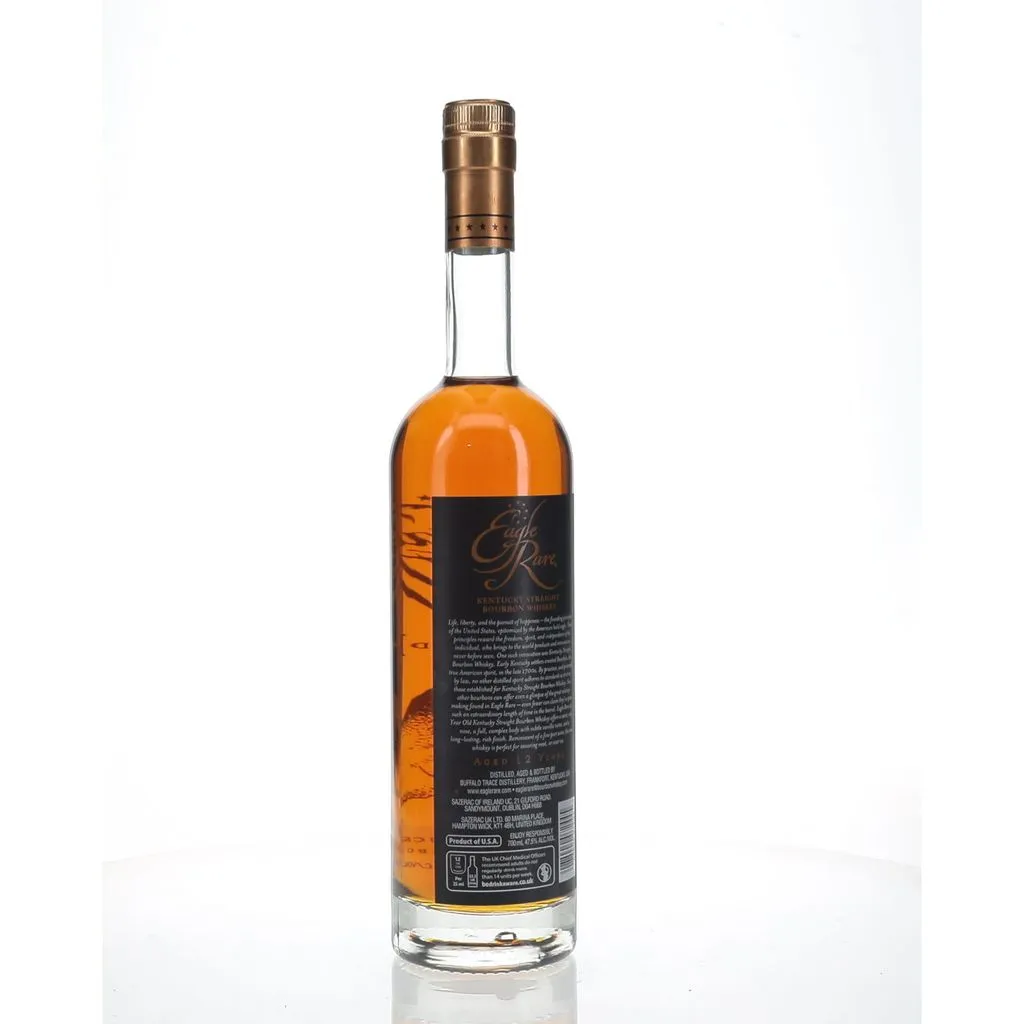
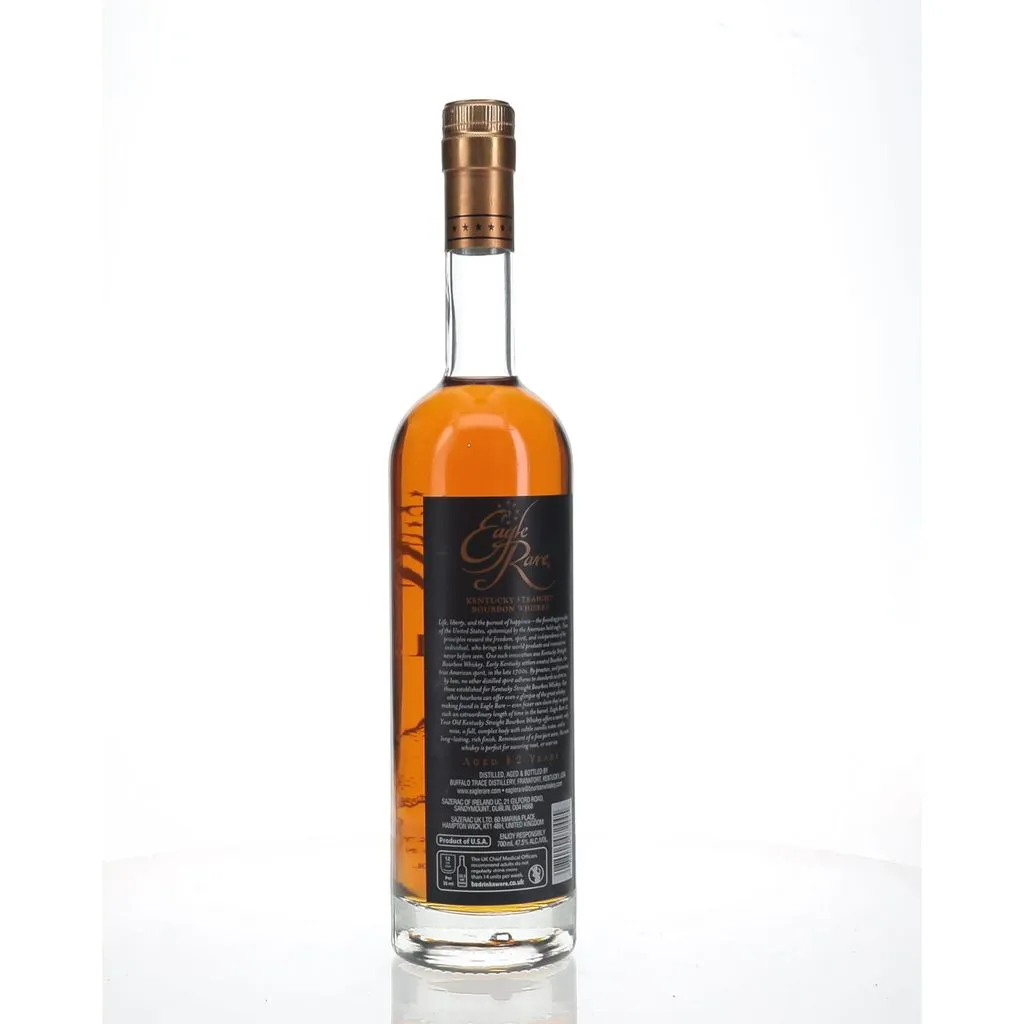
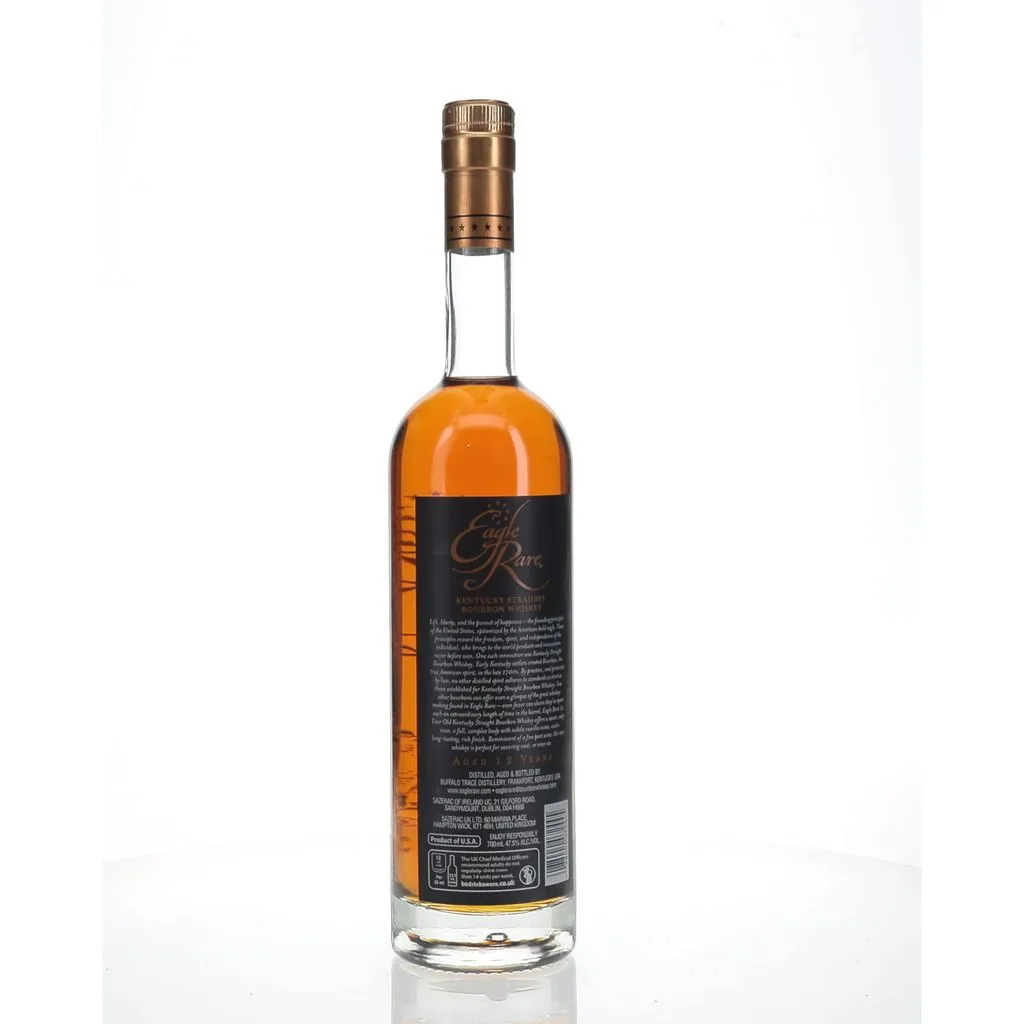
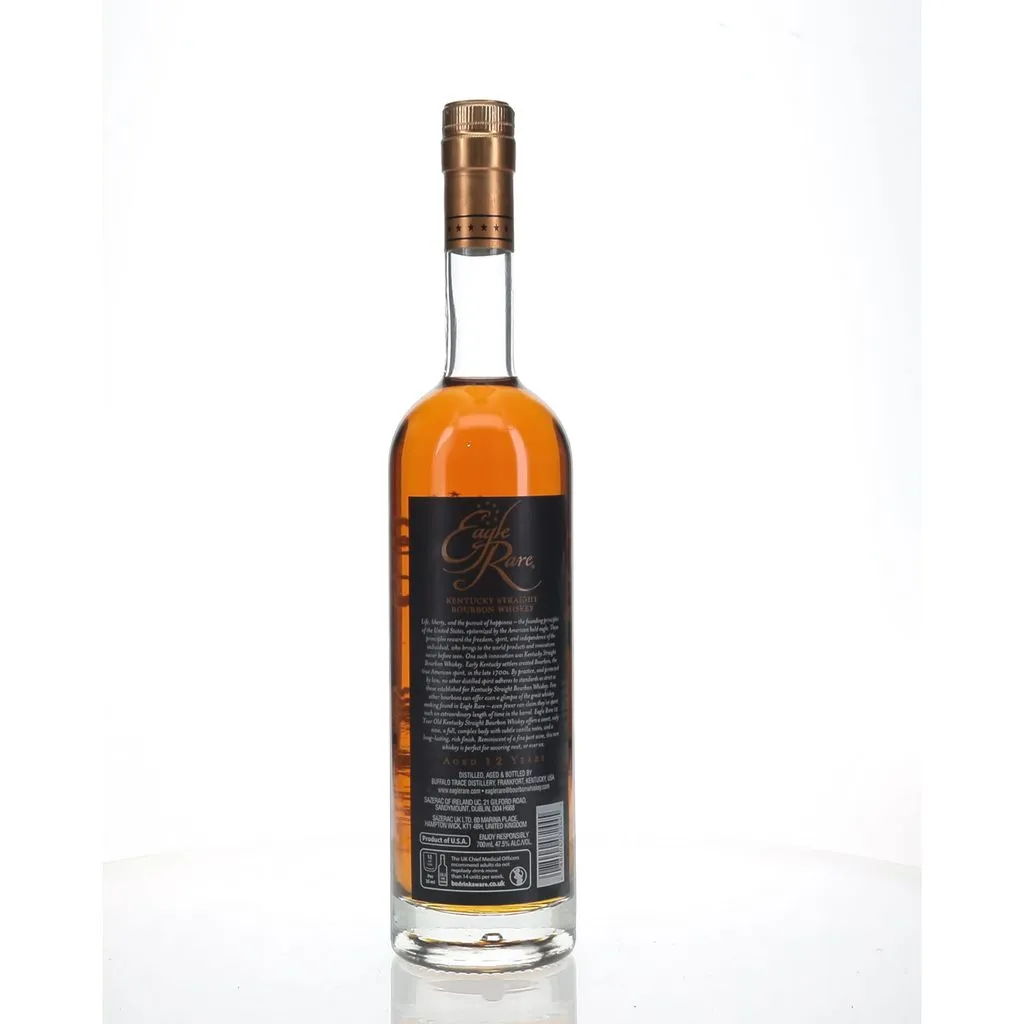
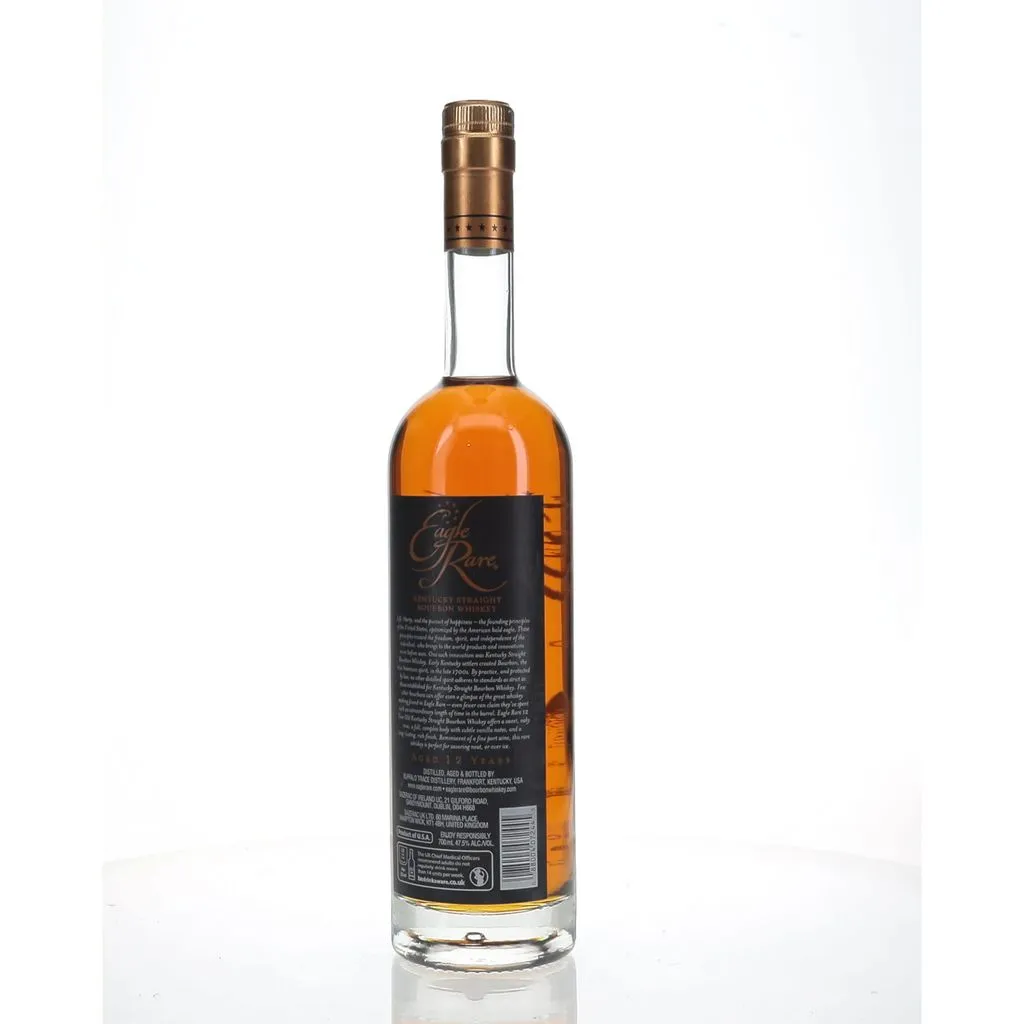
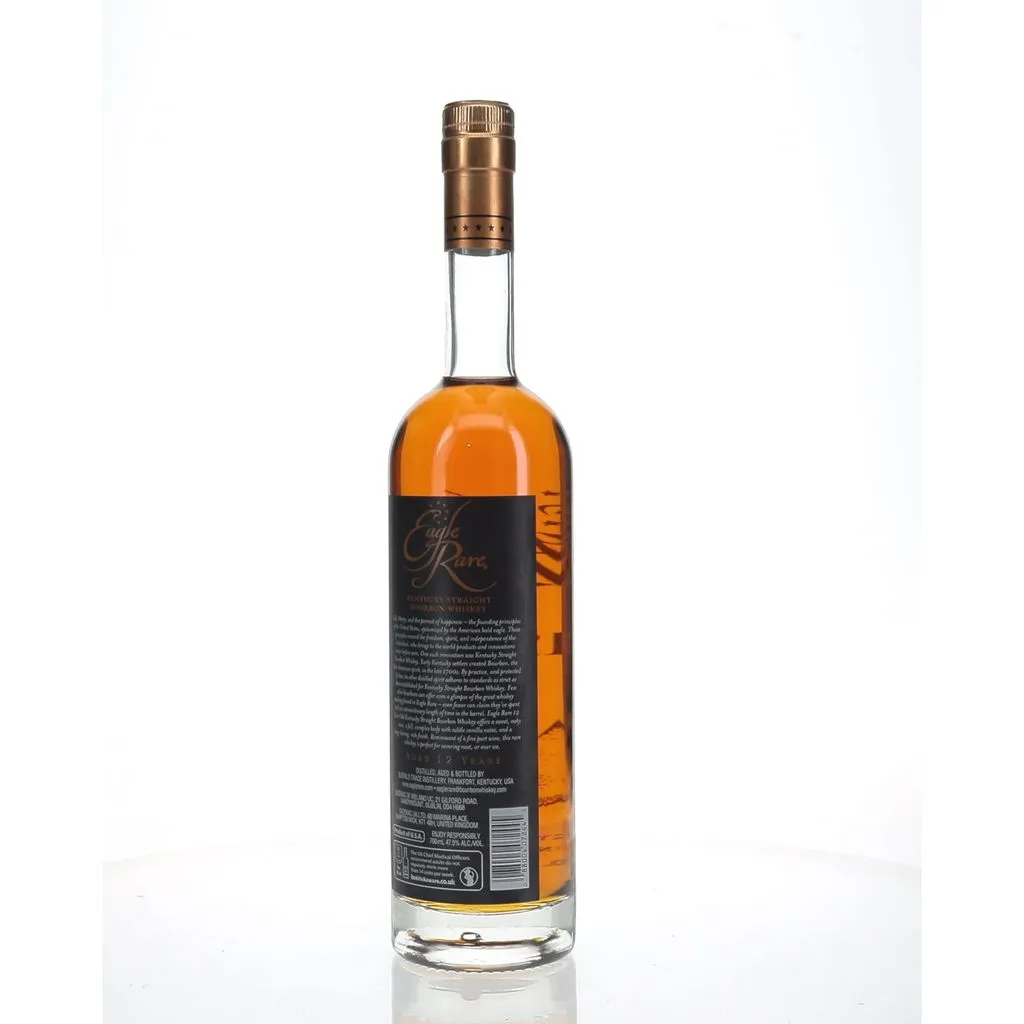
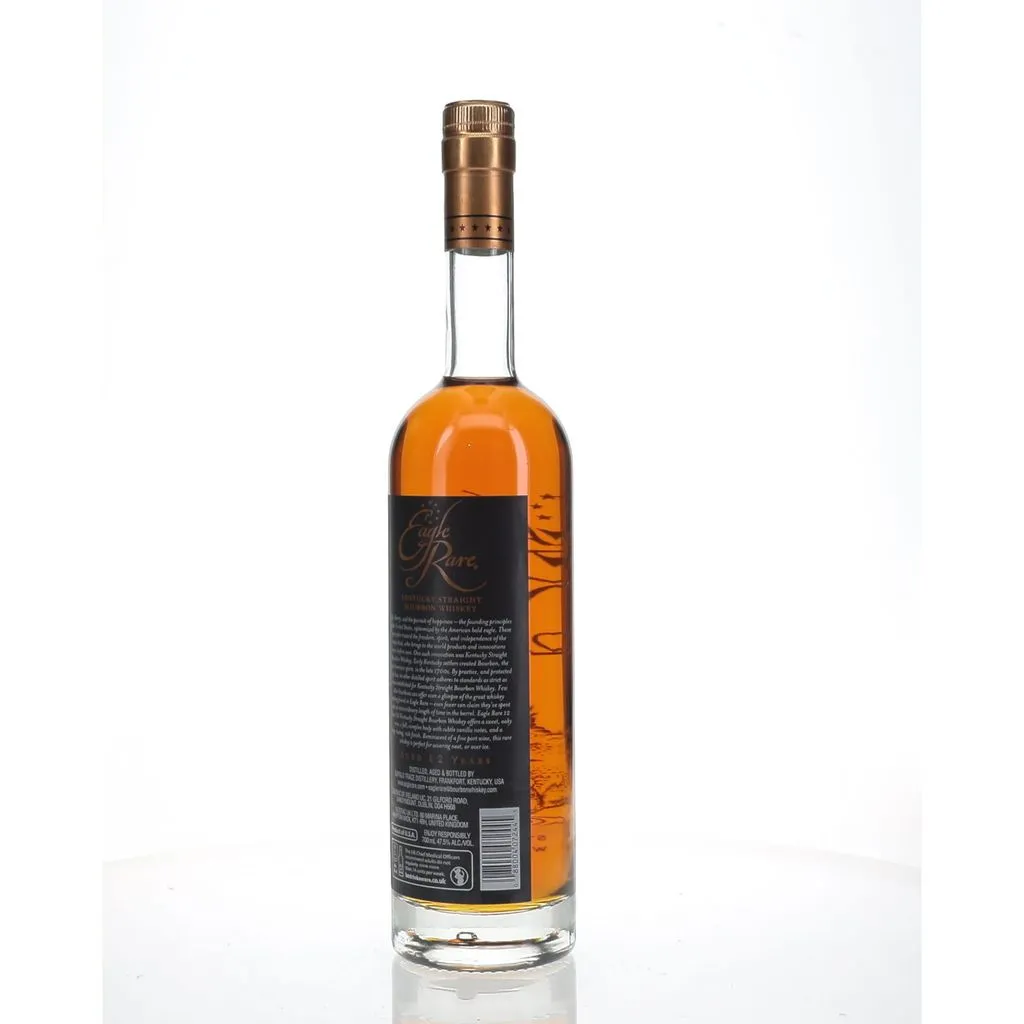
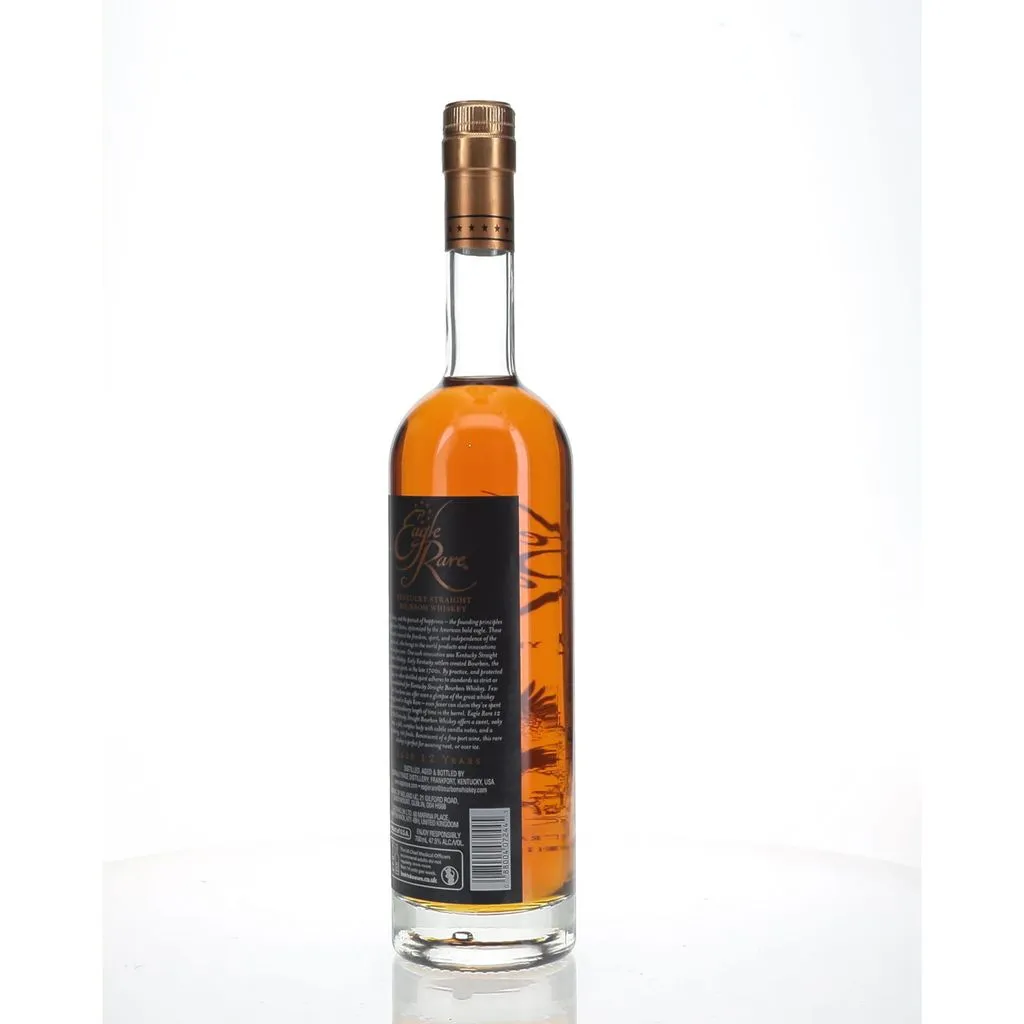
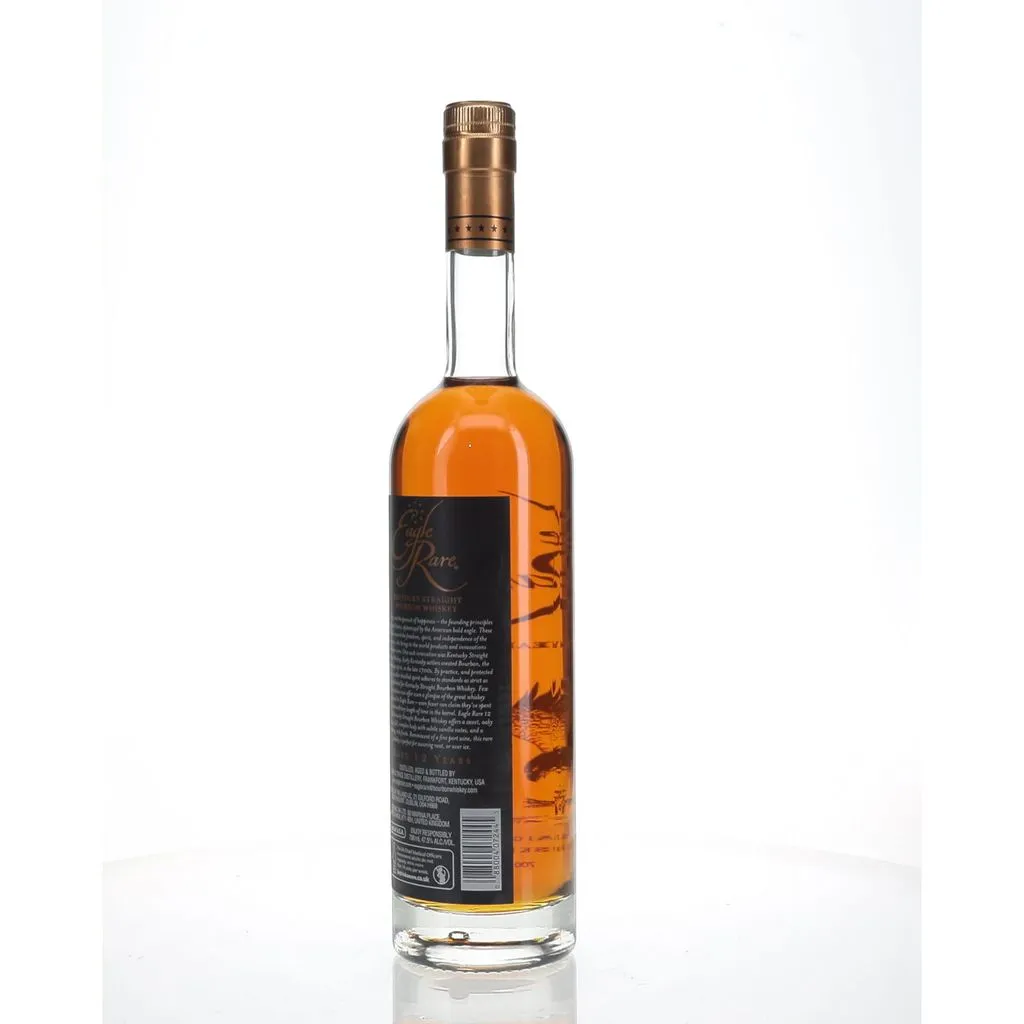
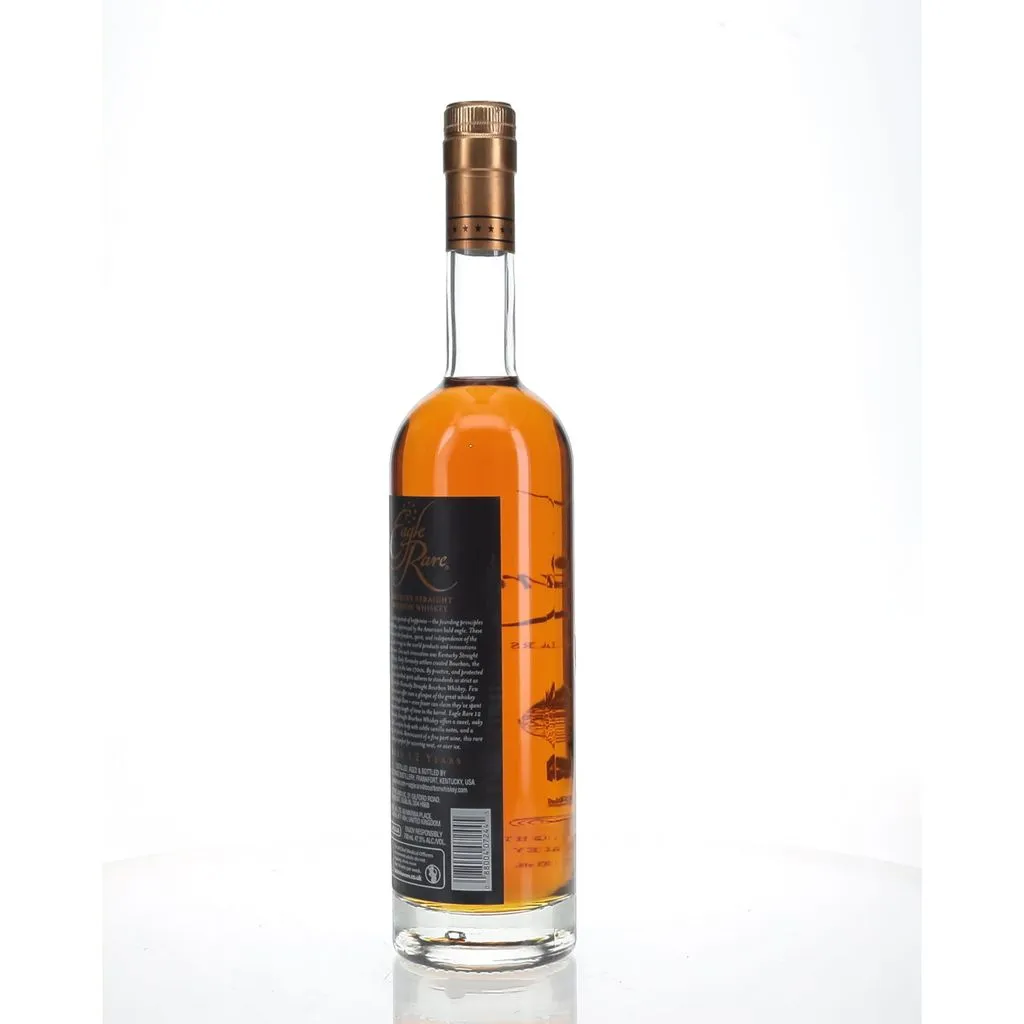
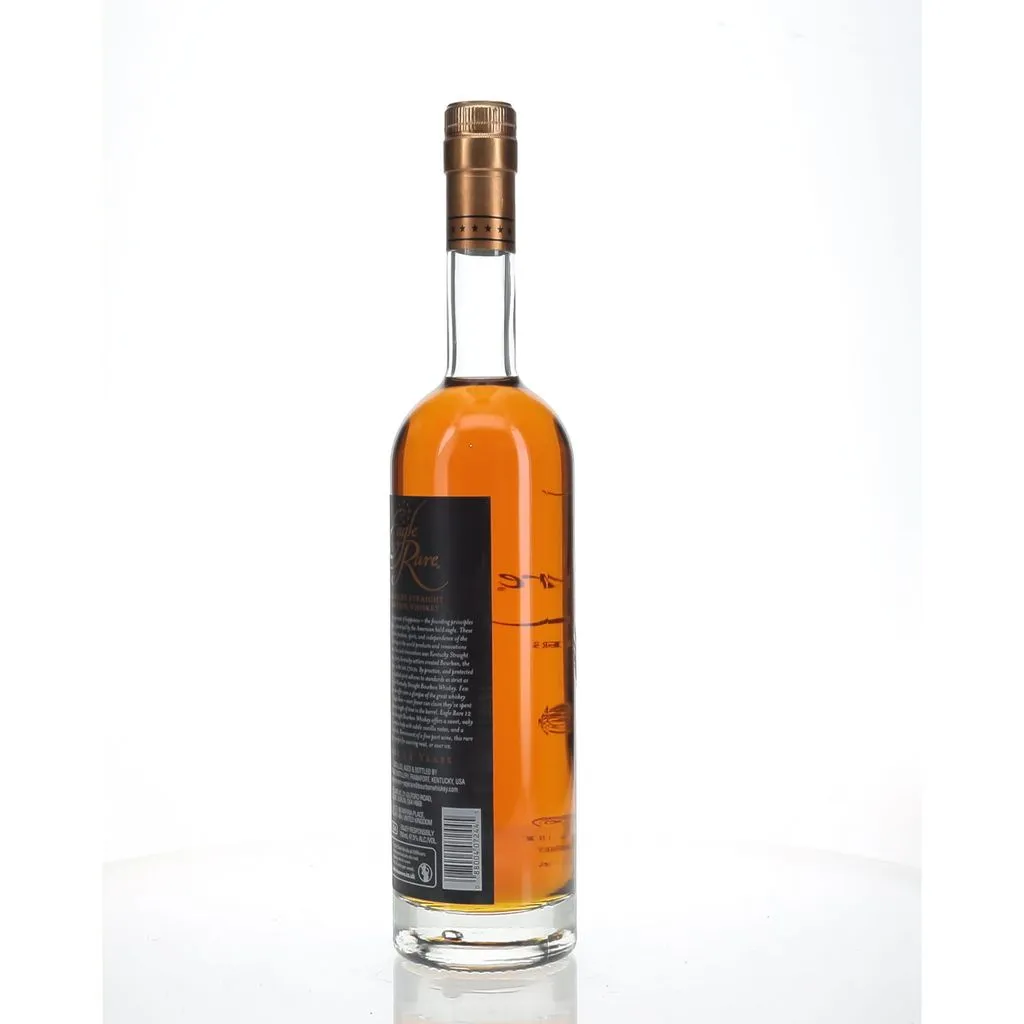
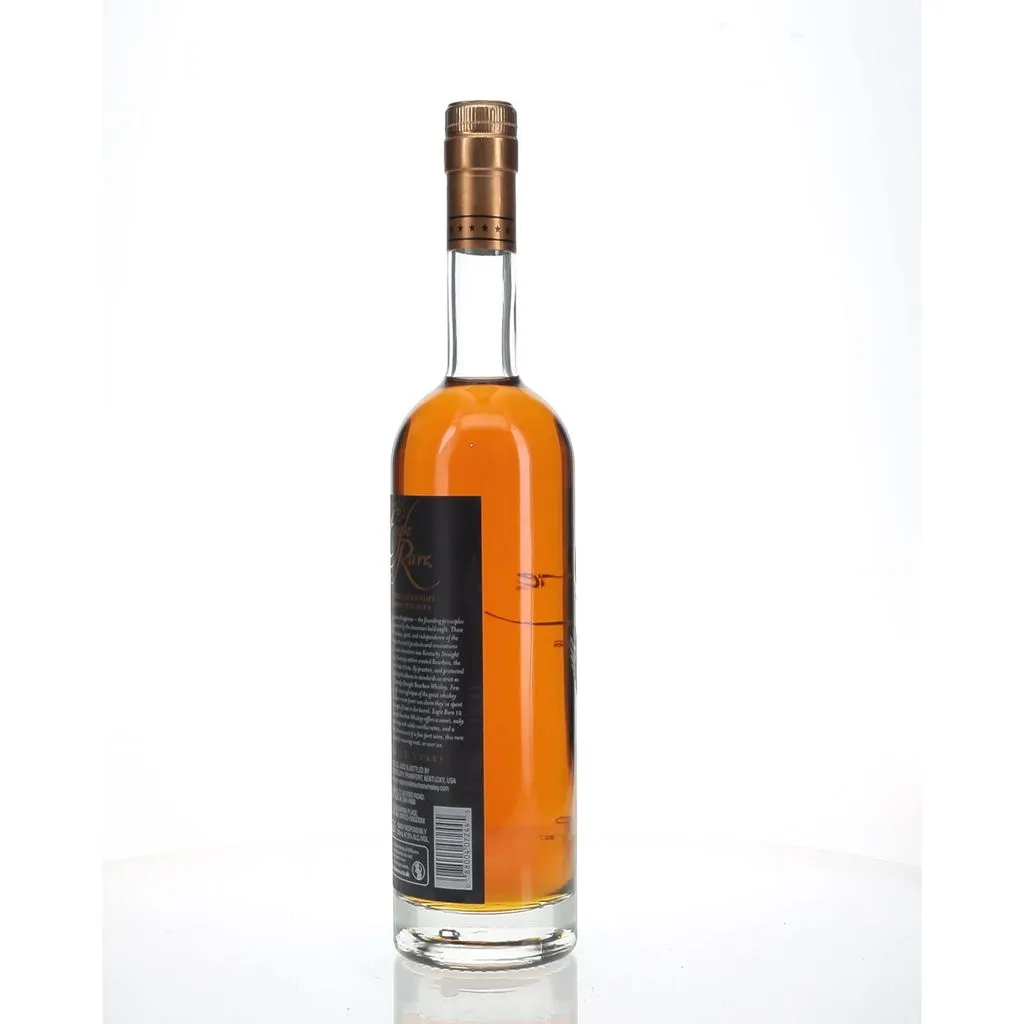
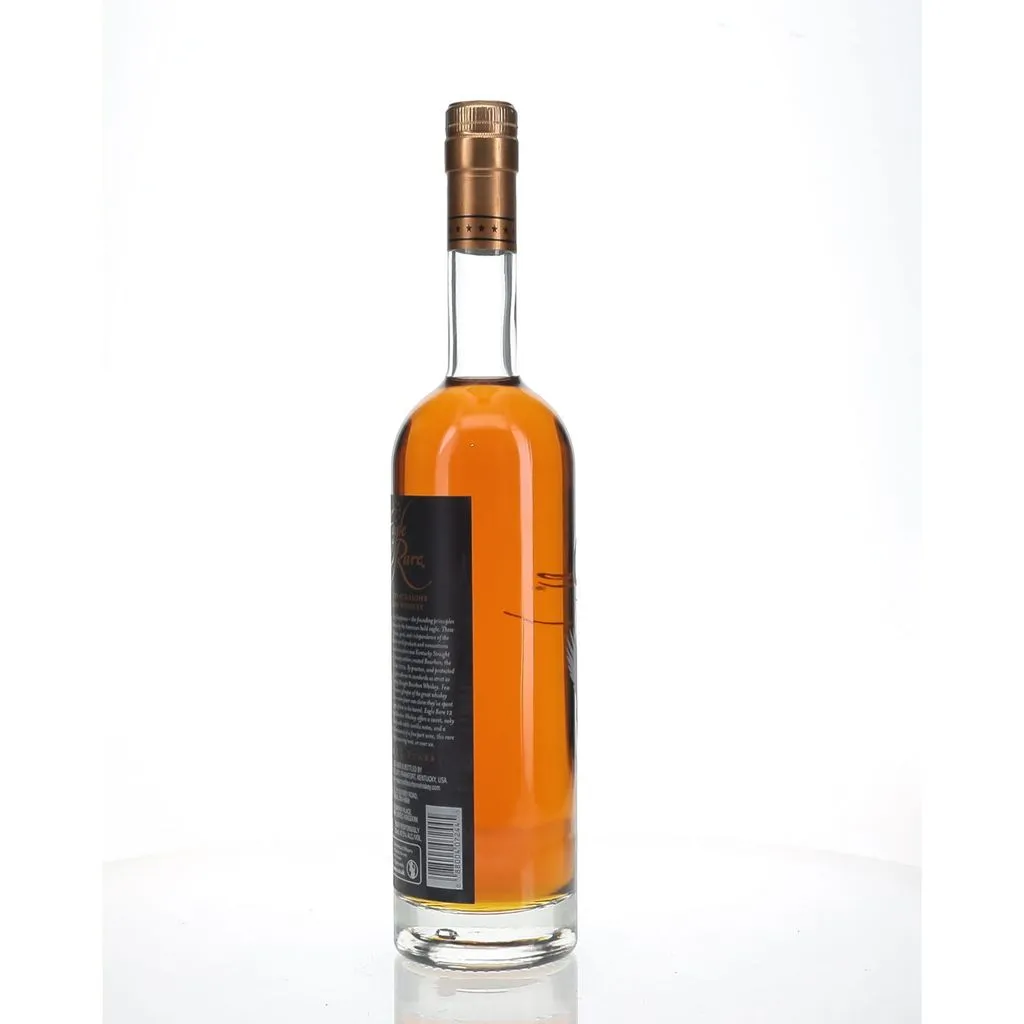
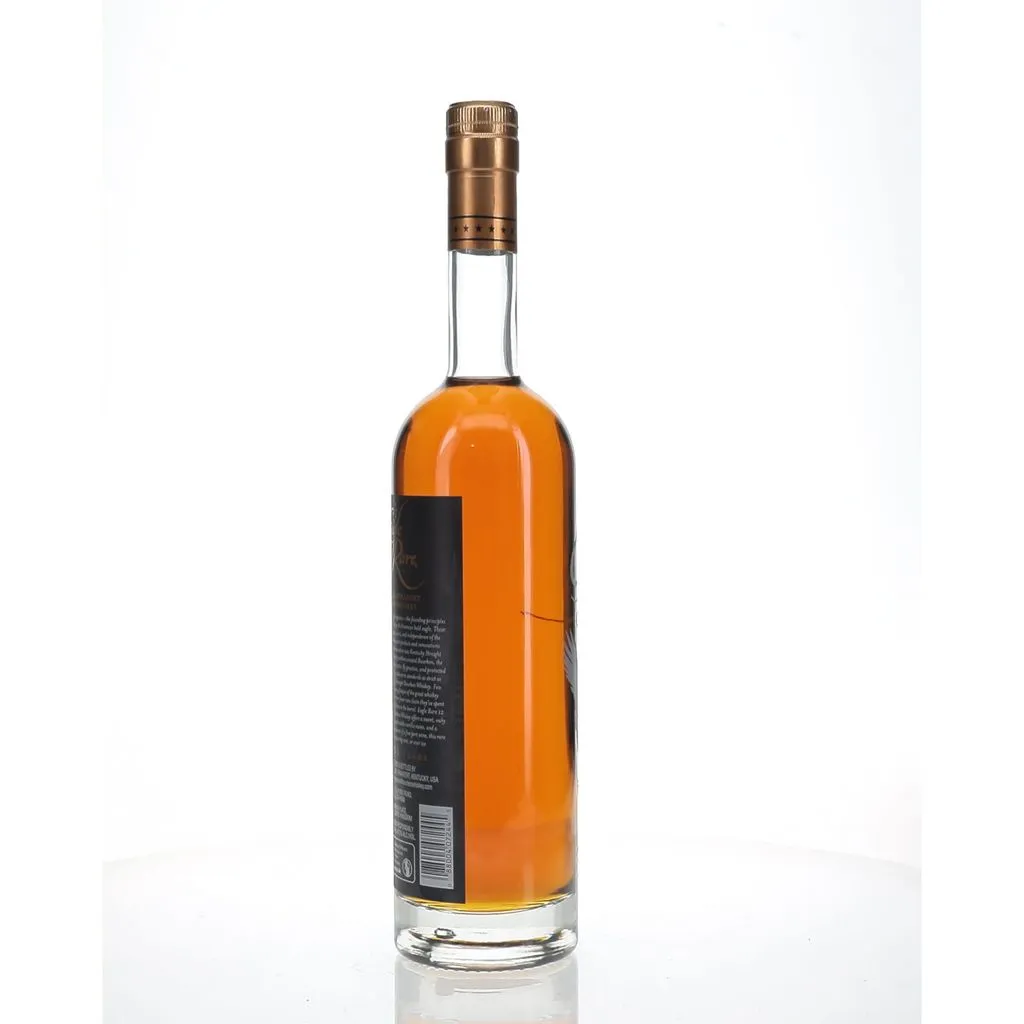
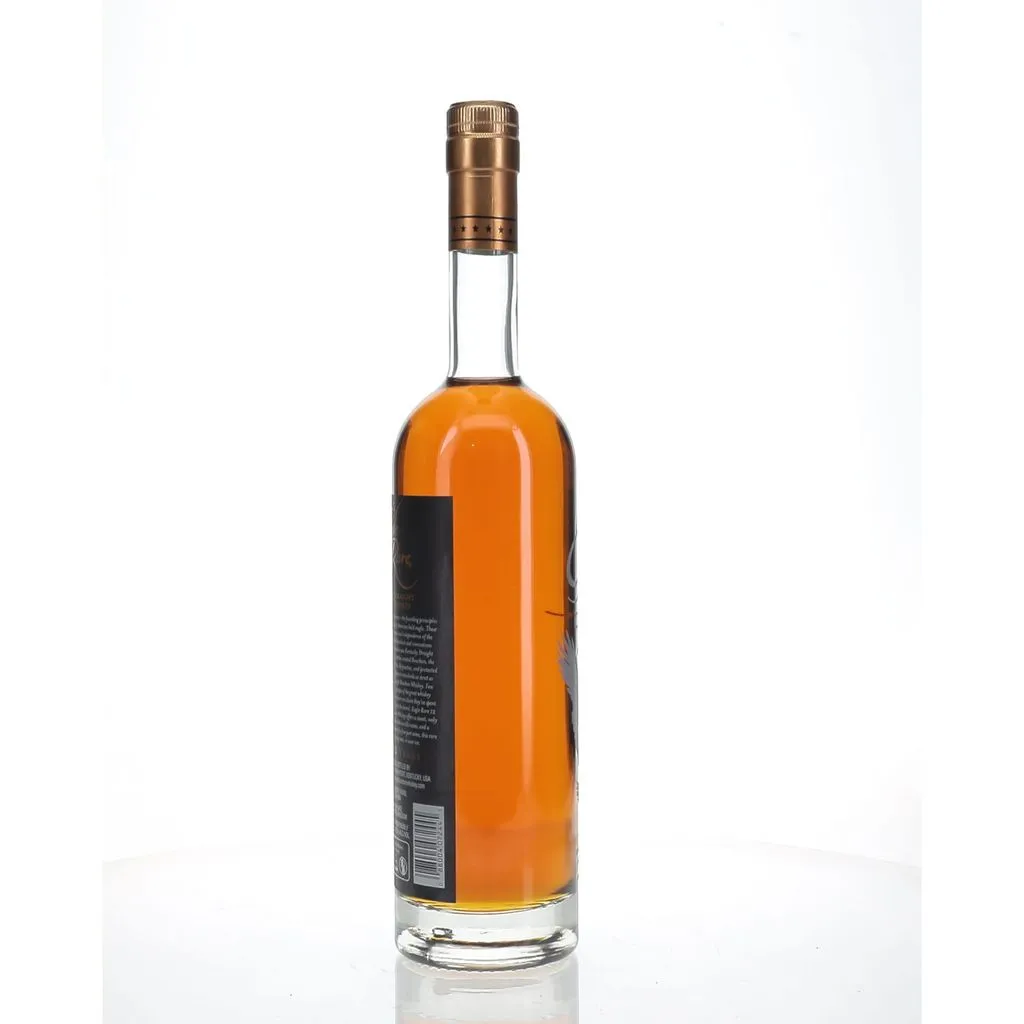
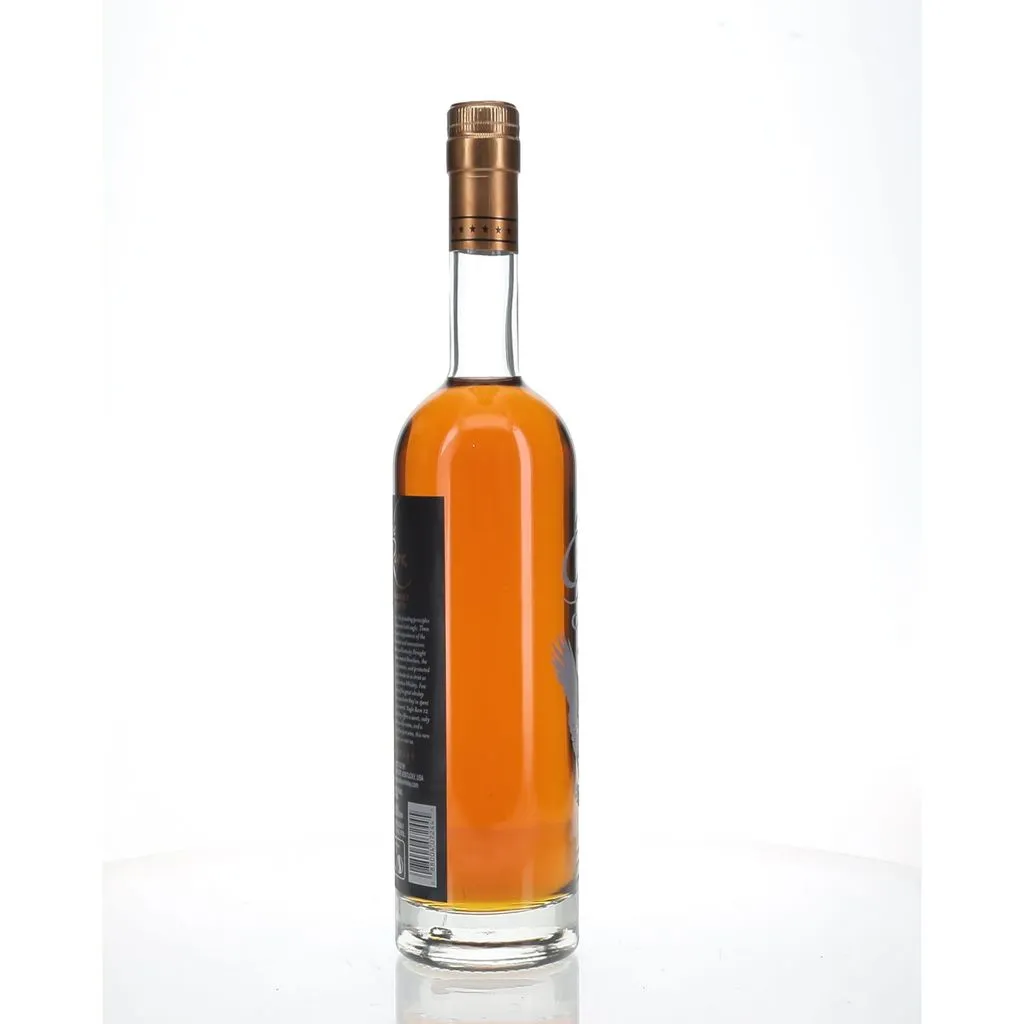
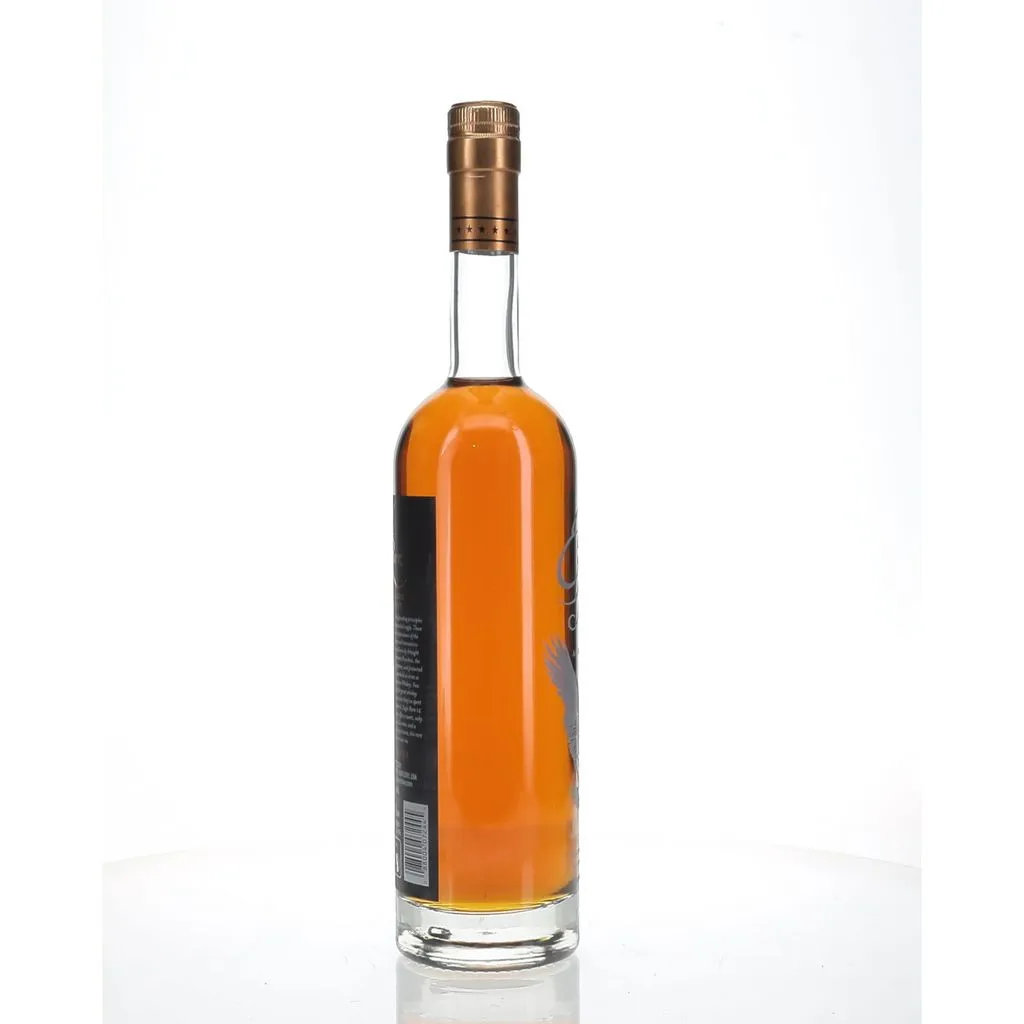
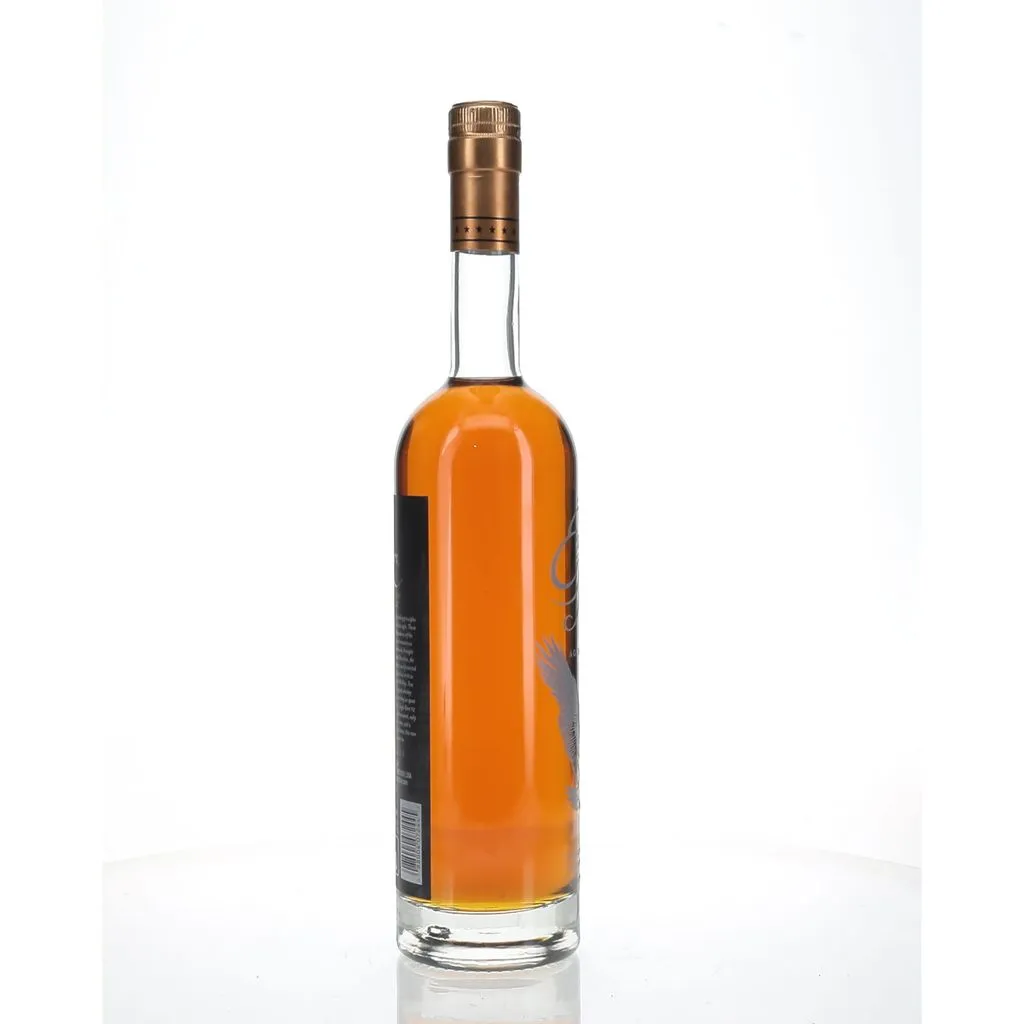
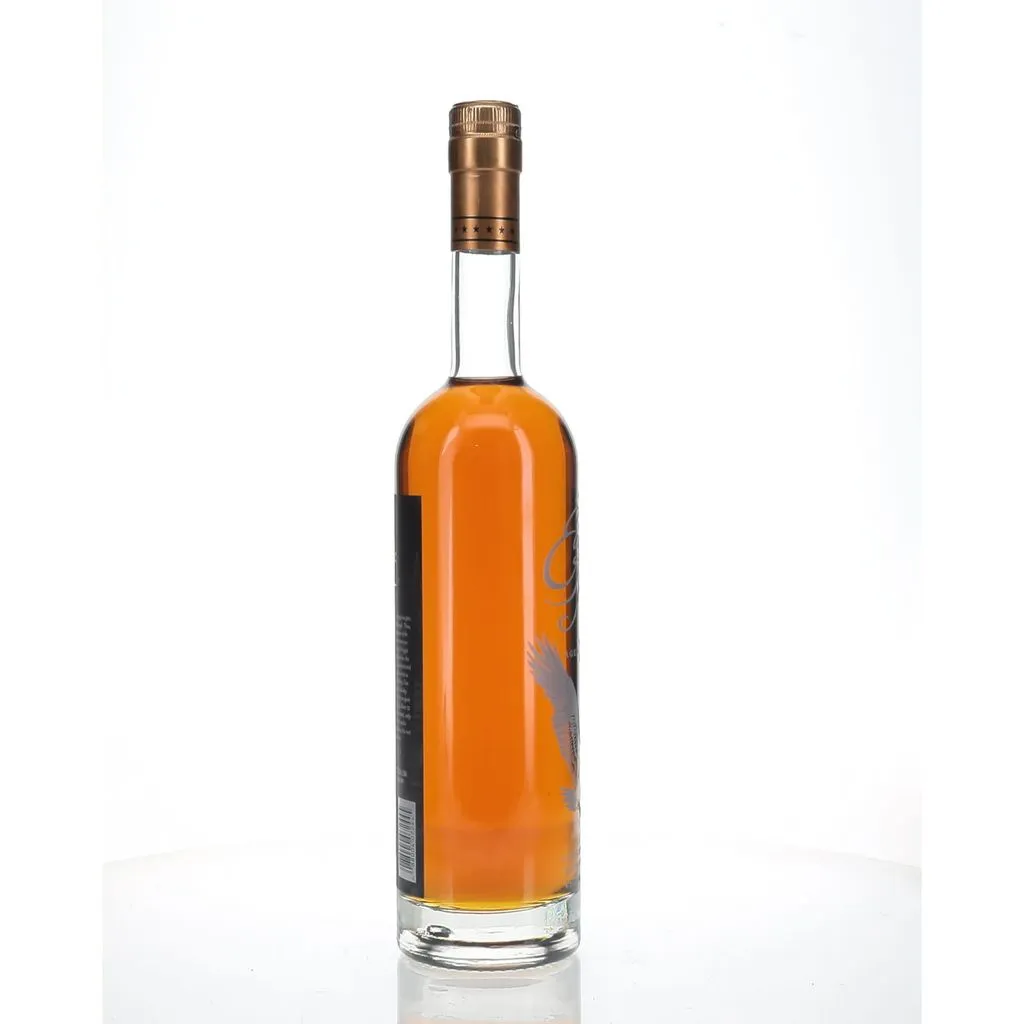
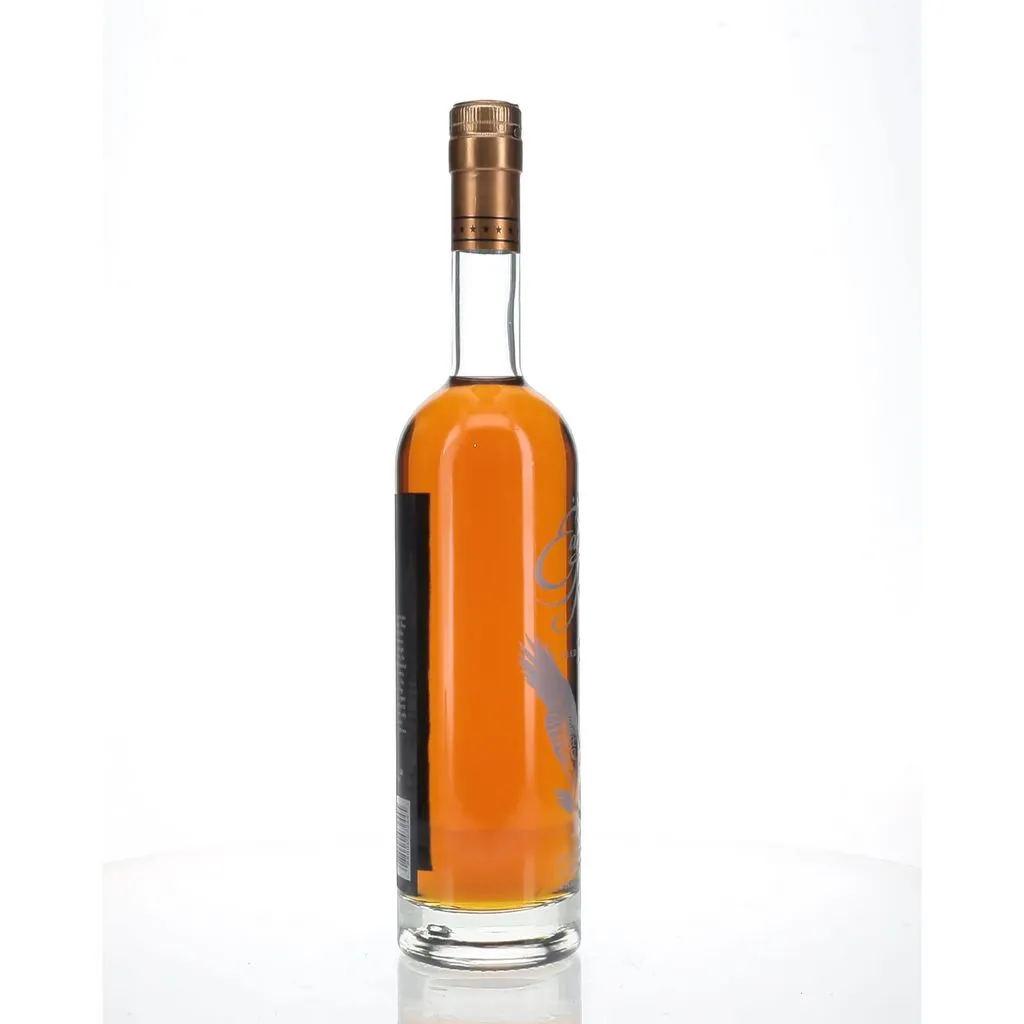
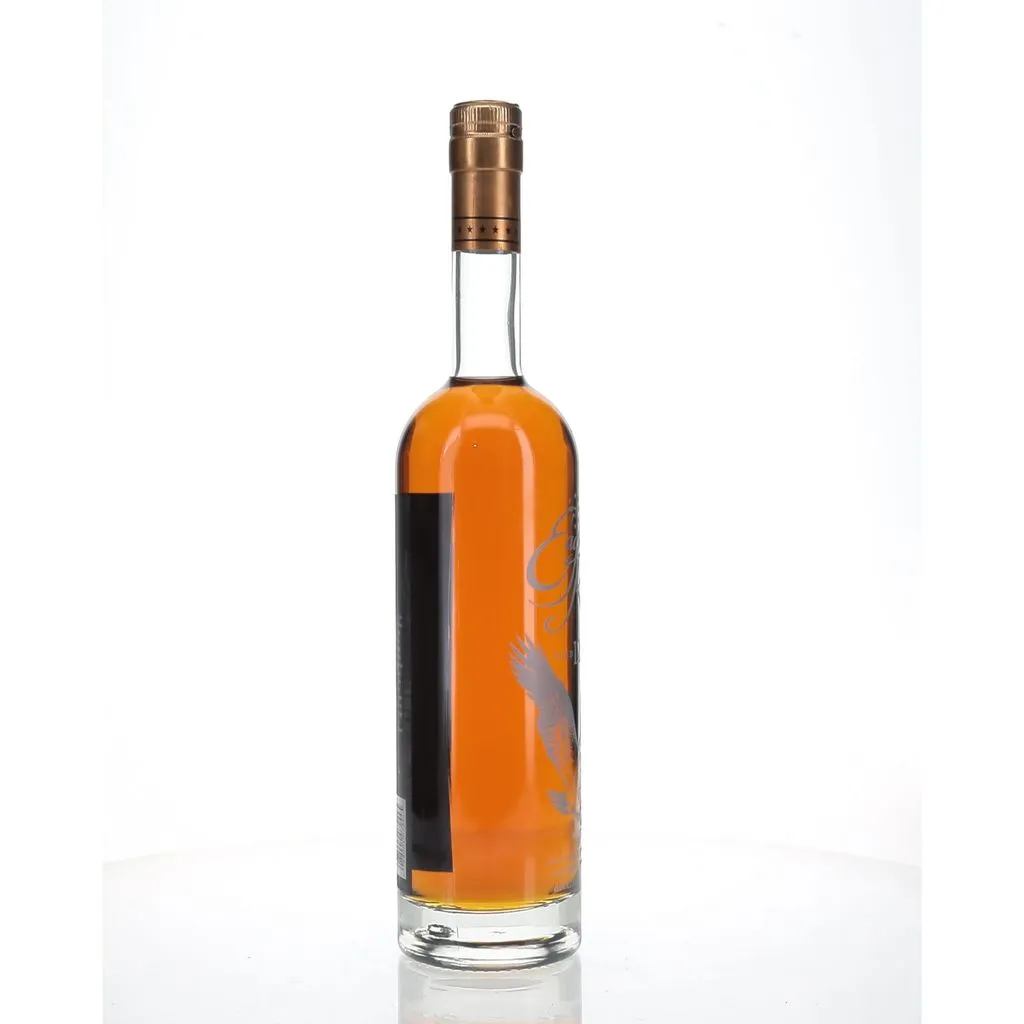
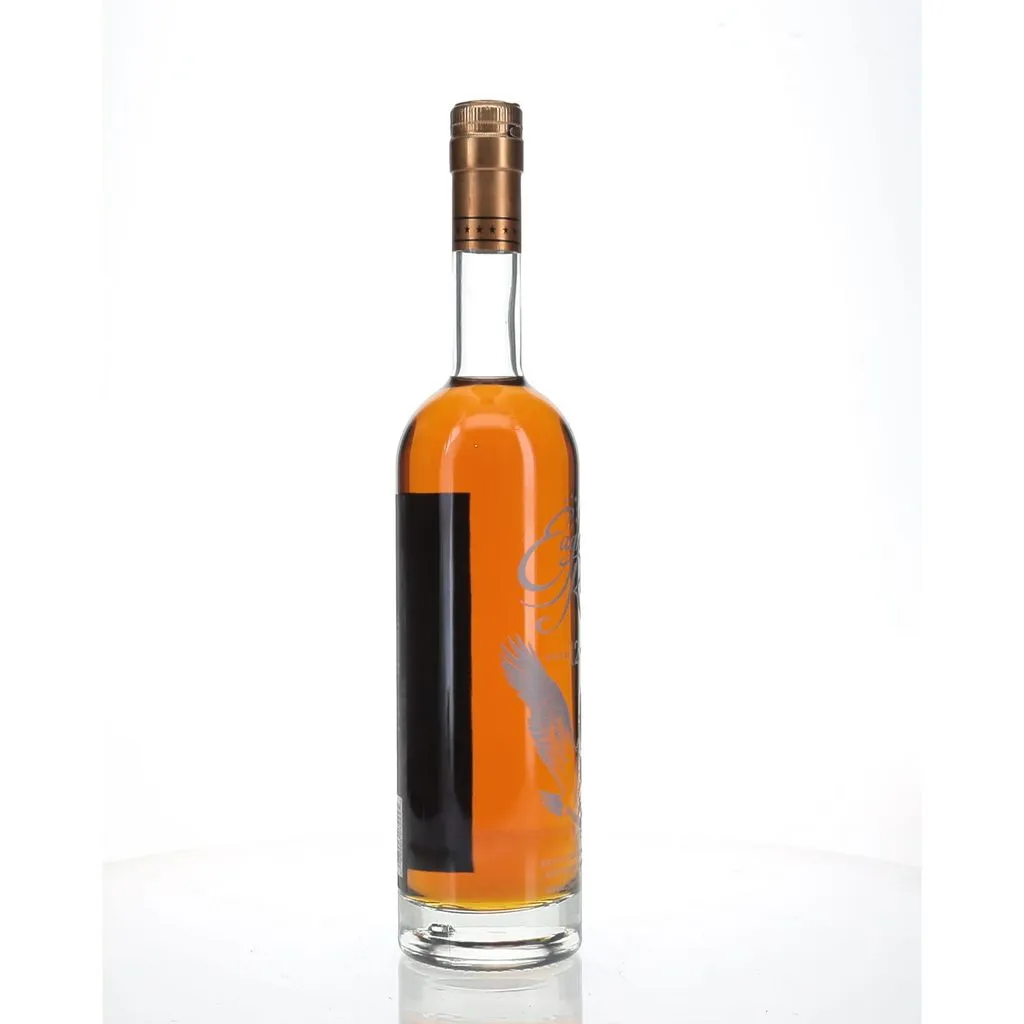
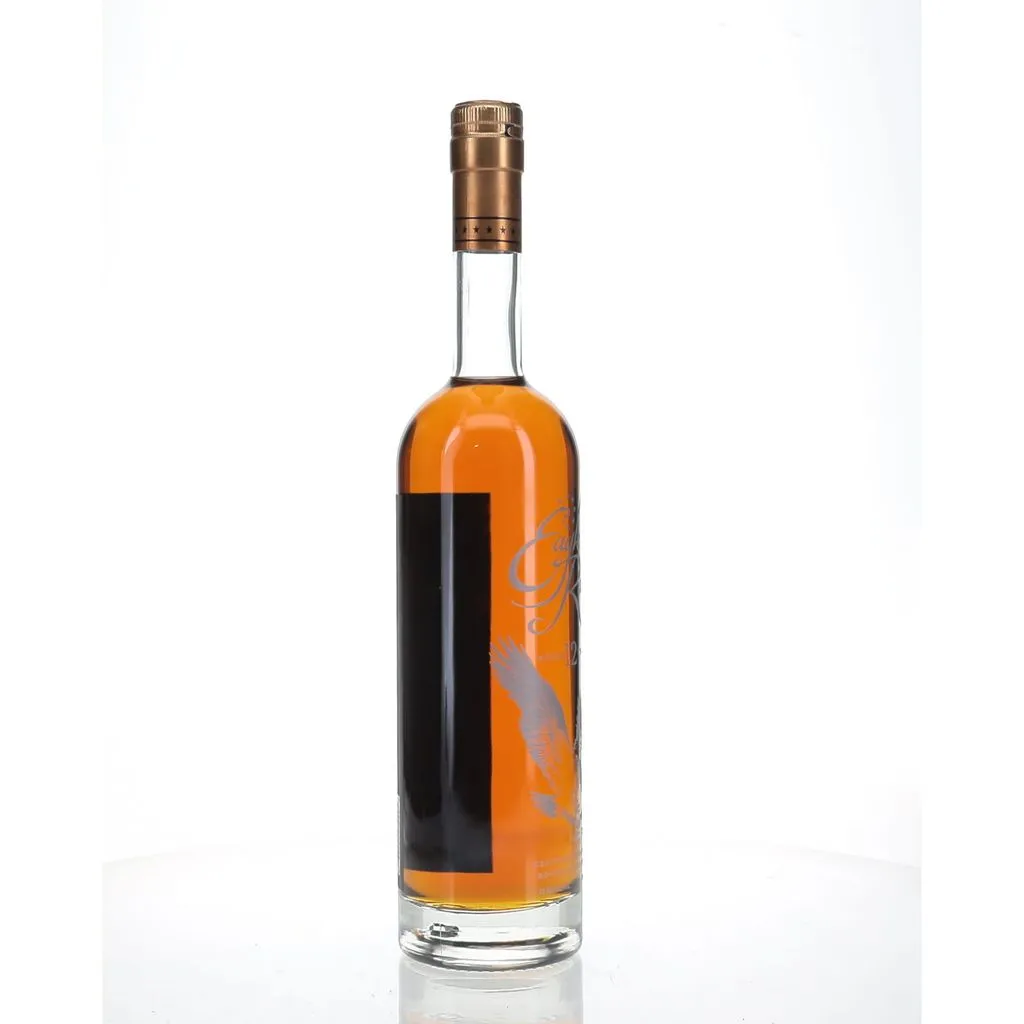
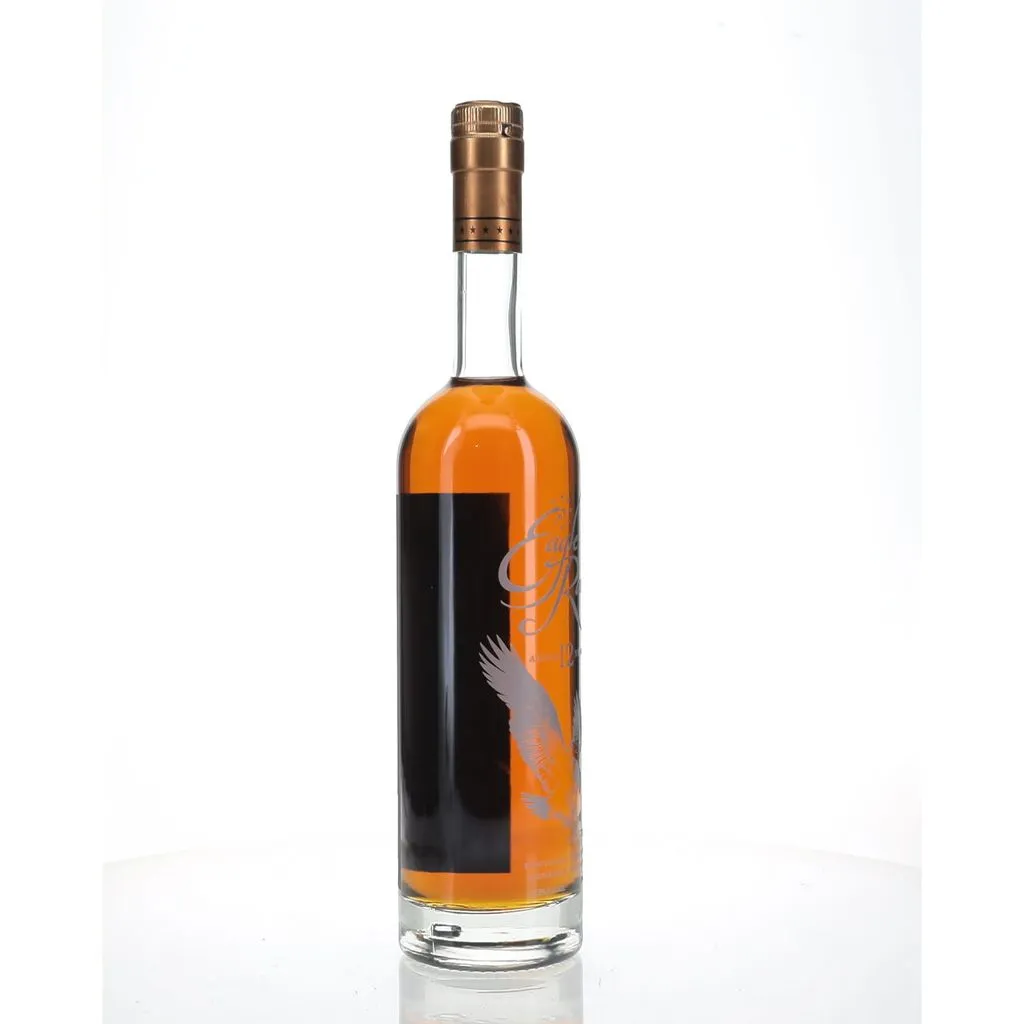
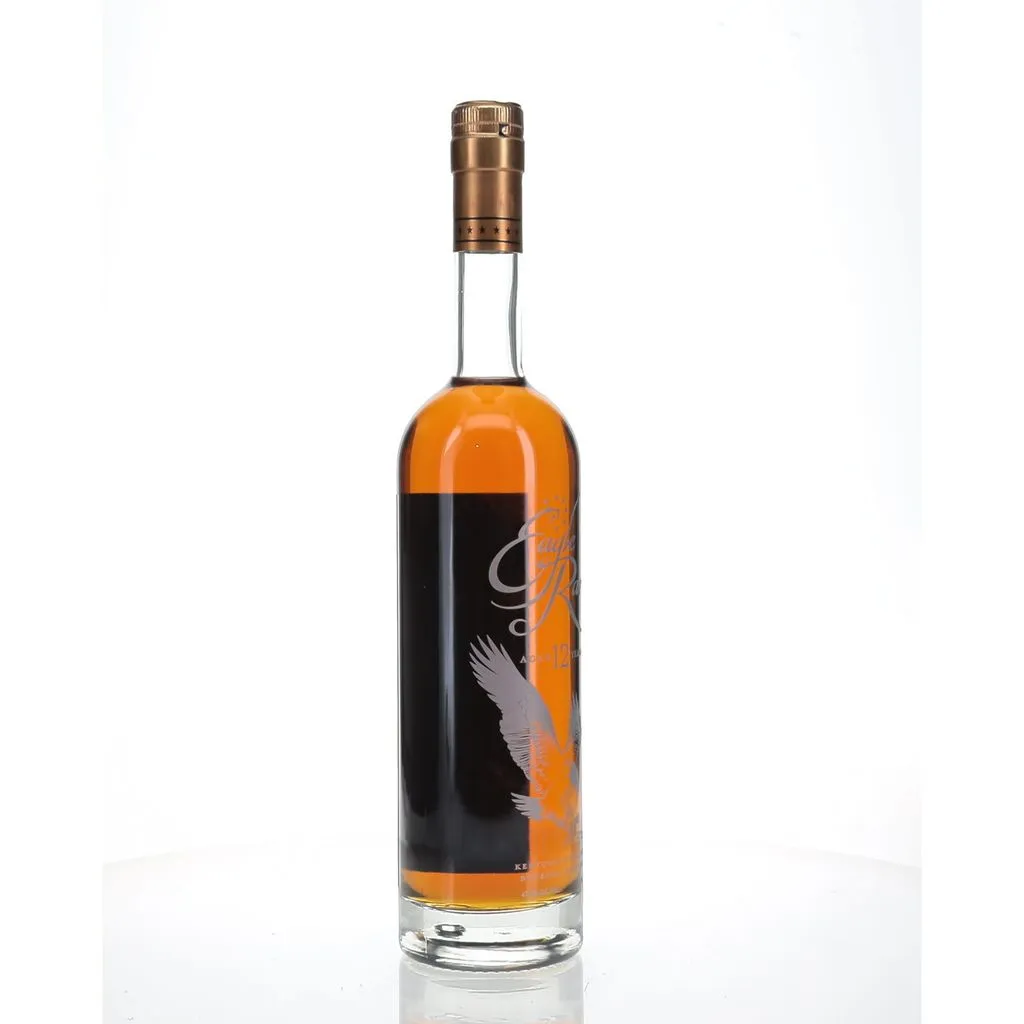
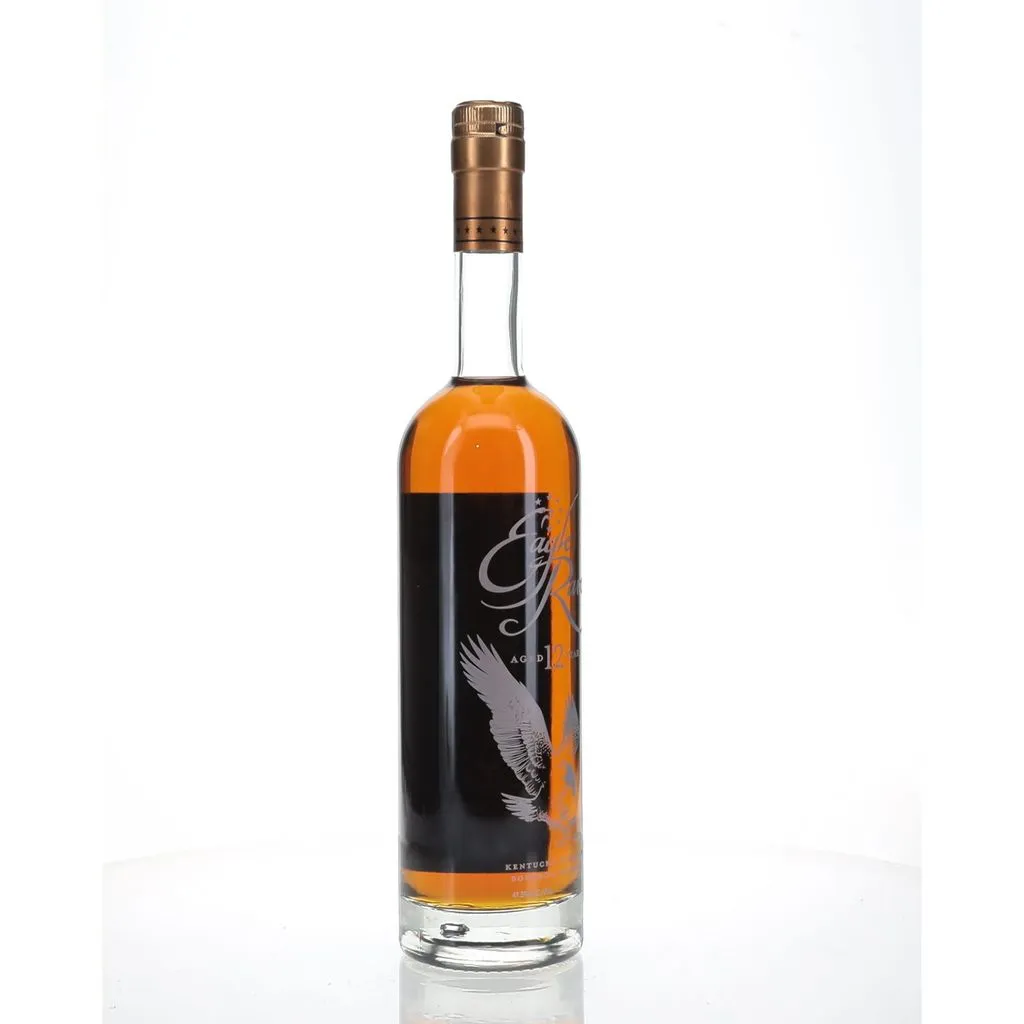
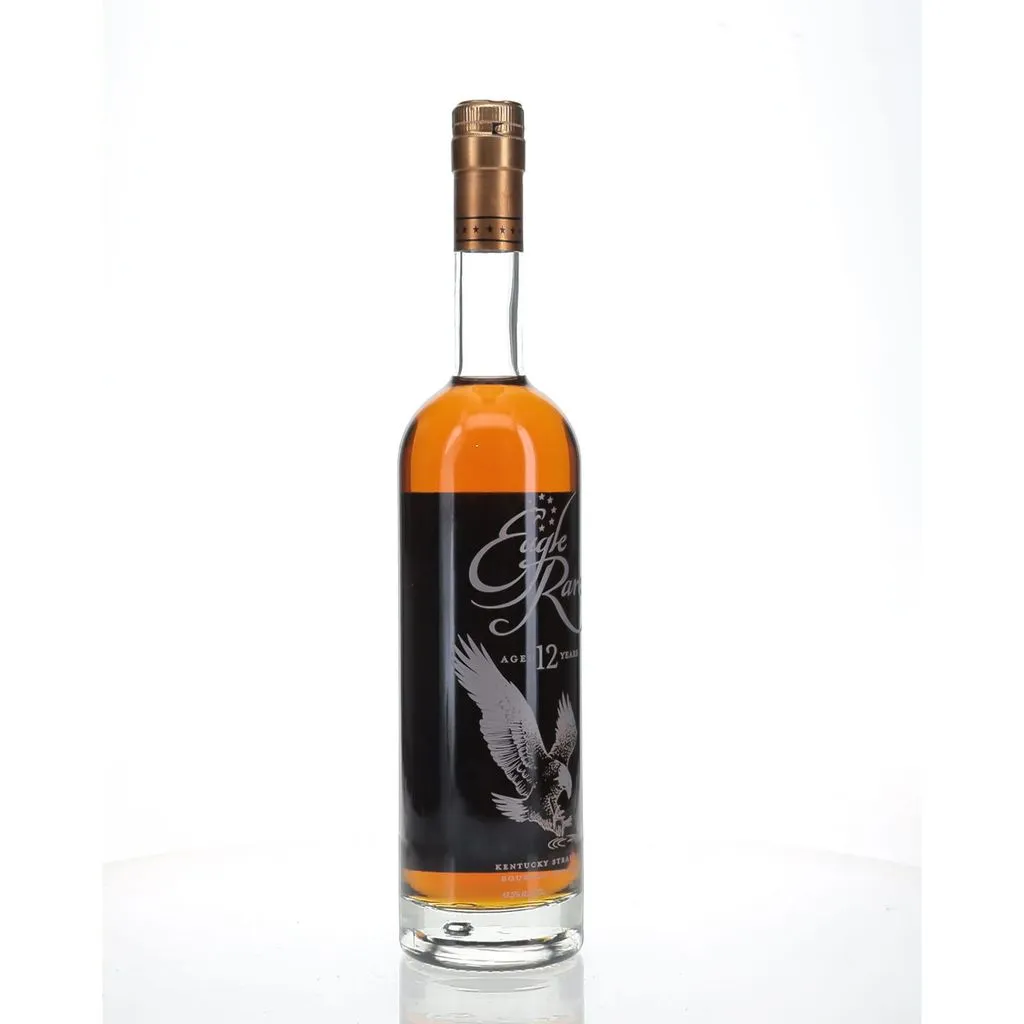
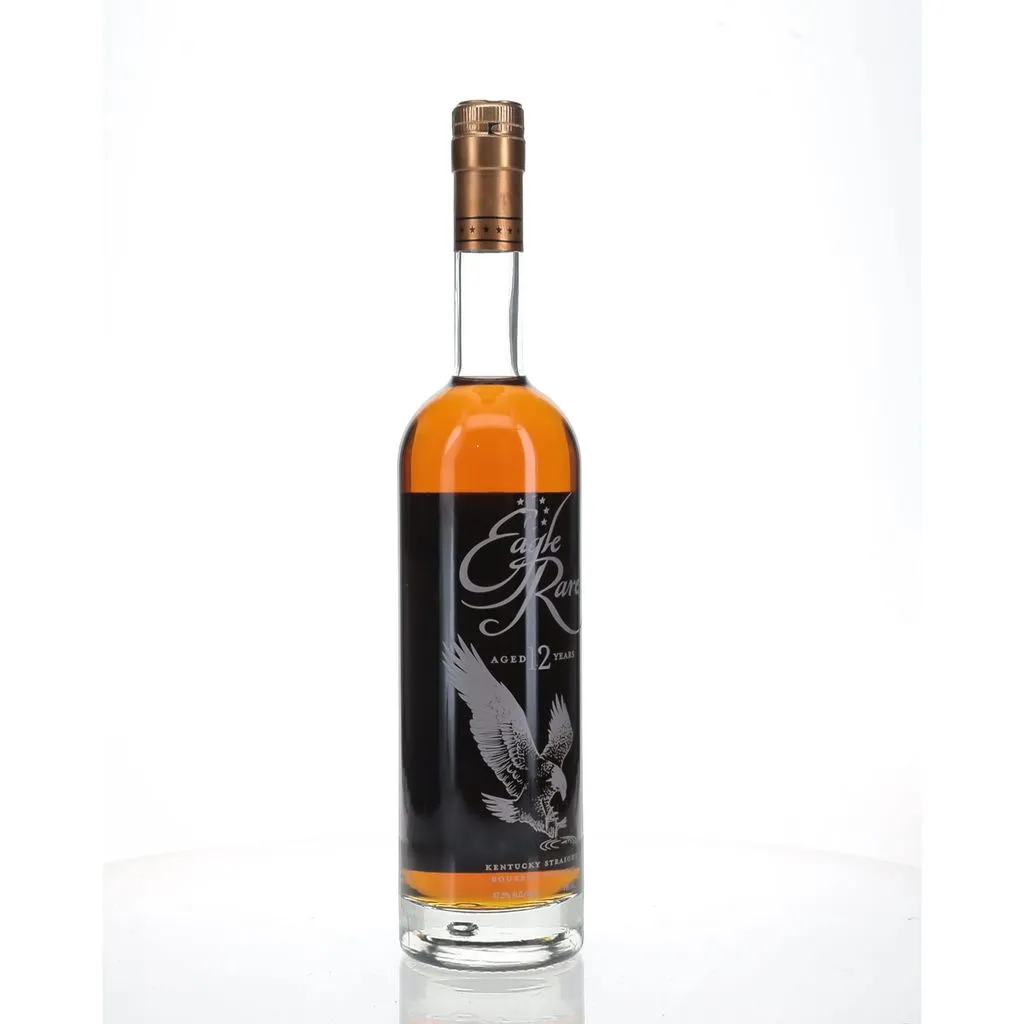
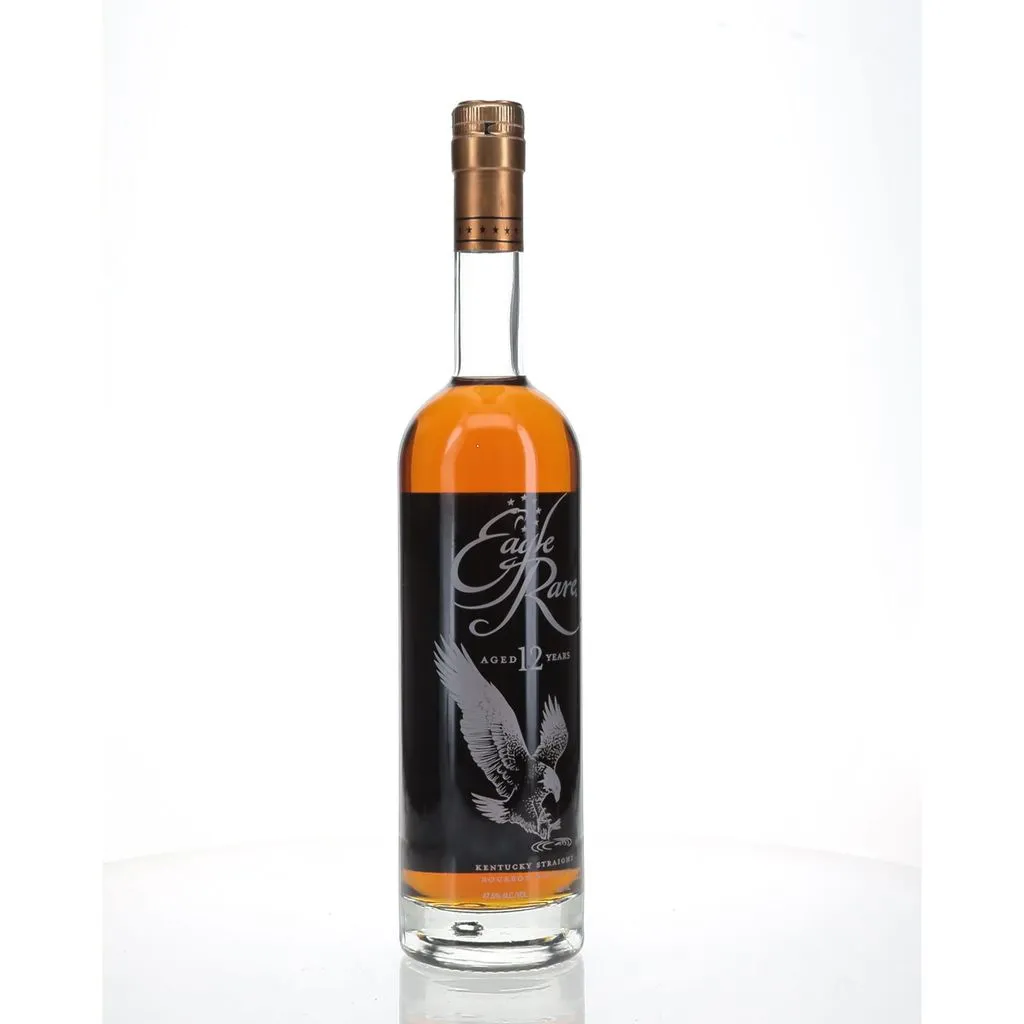
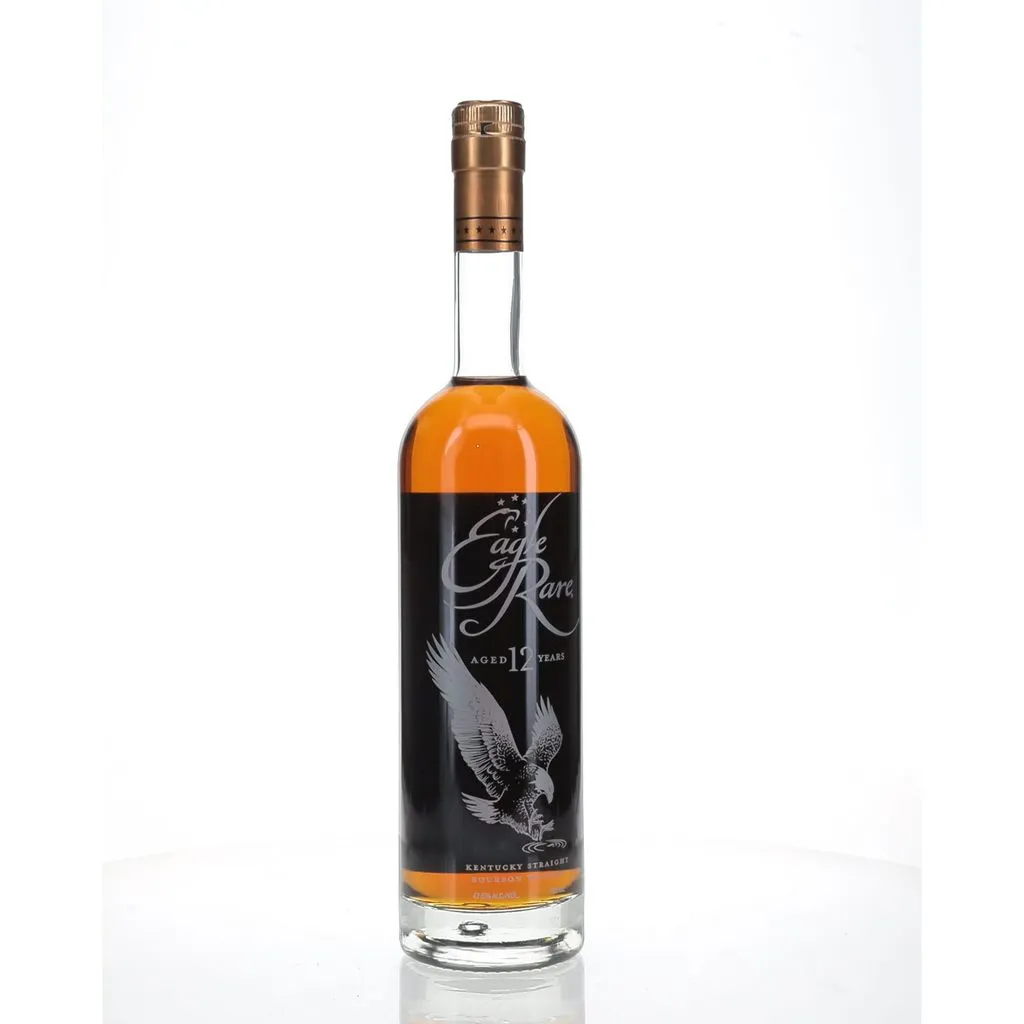
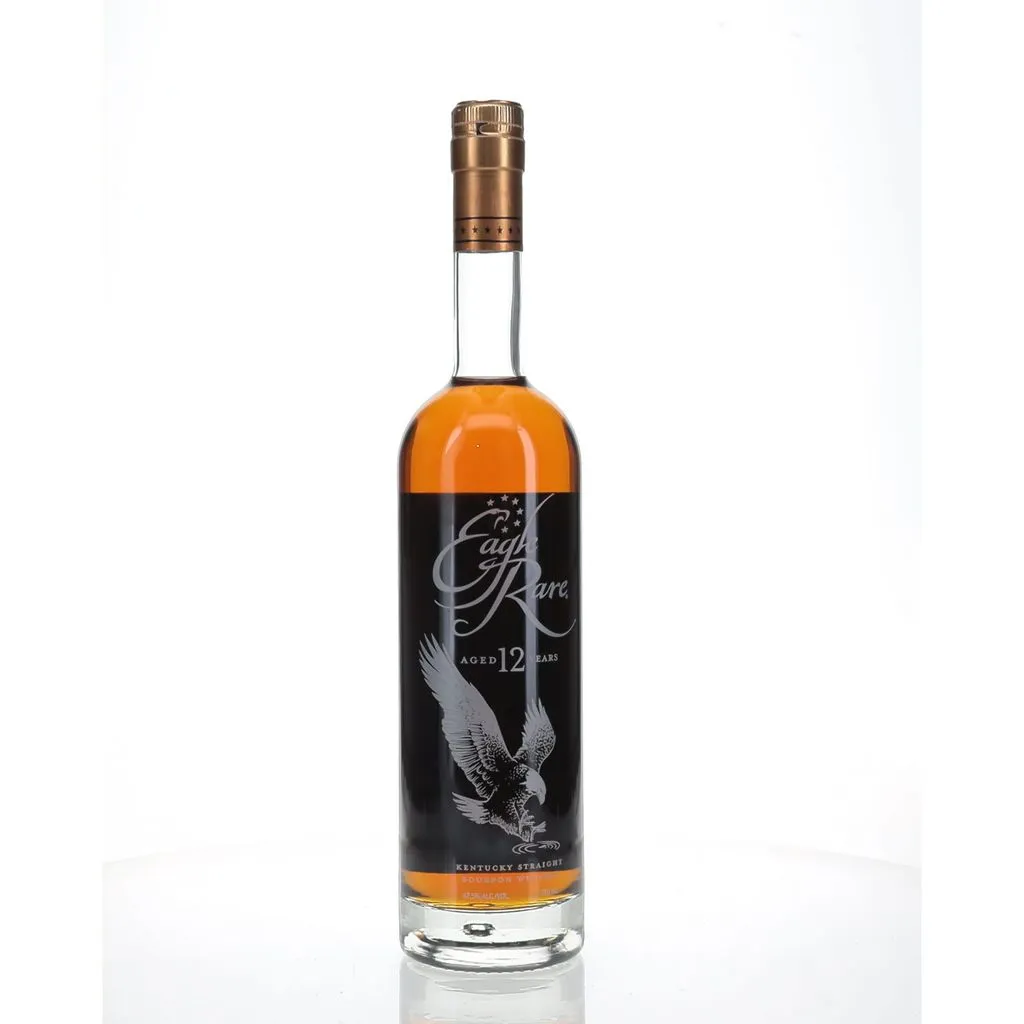
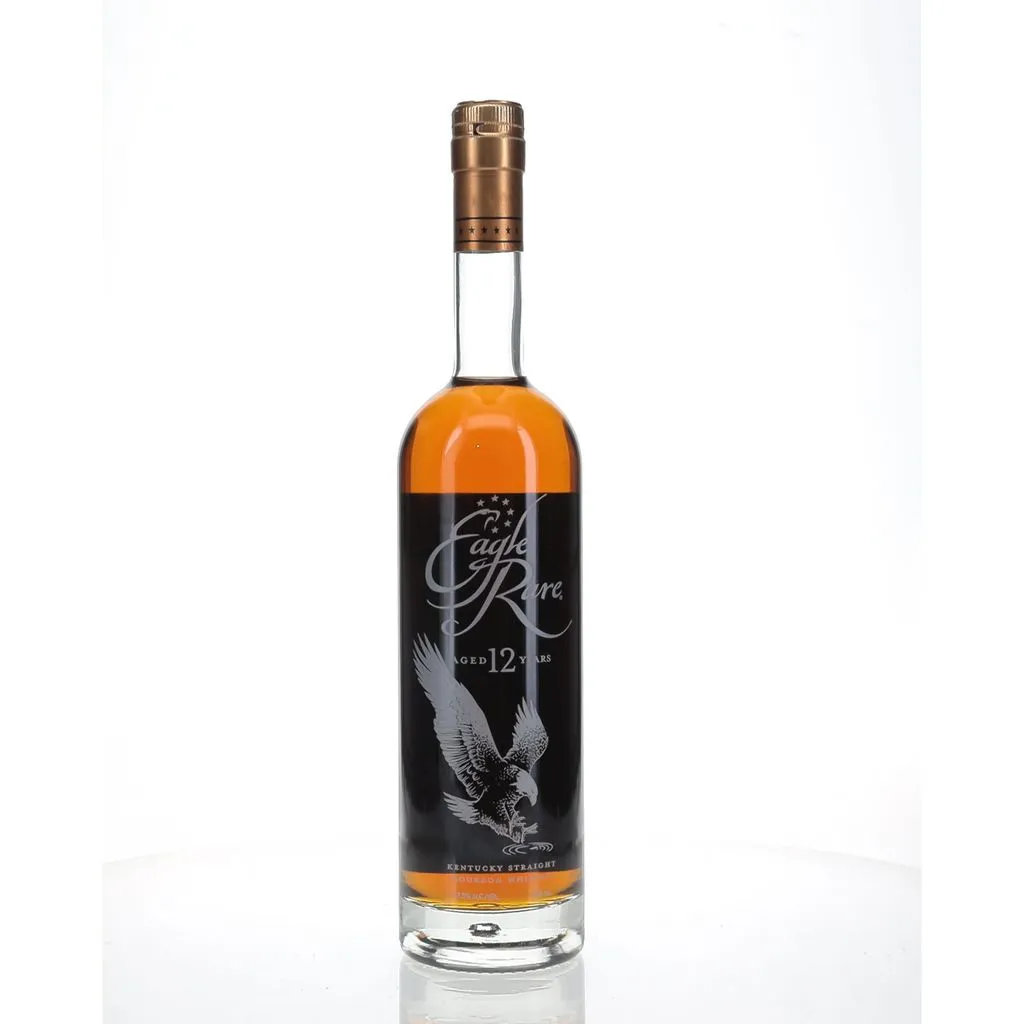
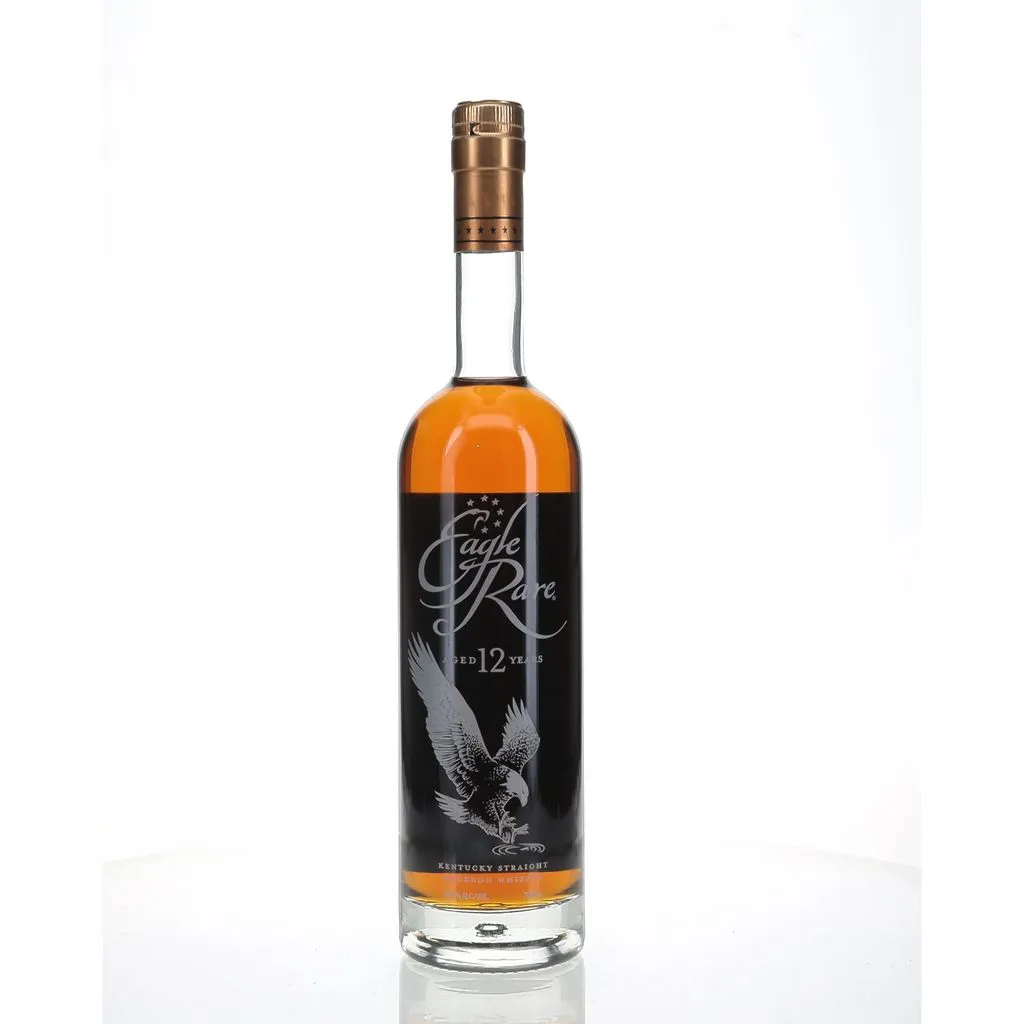
Eagle Rare 12 Year 700ml
Asking Price
$199.00
Highest Offer: $0.00
A 12 year old expression of Eagle Rare bourbon from Buffalo Trace, crafted from their #1 low rye mashbill. Bottled at 47.5% Abv, this slightly older and higher proof offering serves as a sequel to the incredibly popular Eagle Rare 10 year. This 12 year expression was announced in June 2025 and has proven to be a highly sought after bottle since it debuted.
Eagle Rare
While the Eagle Rare brand is now synonymous with Buffalo Trace, its origins trace back to Seagram’s. Launched in 1975 under the leadership of Charles “Chuck” Beam—the grandnephew of Jim Beam—Eagle Rare debuted as a 101-proof, 10-year-old bourbon produced at the Old Prentice Distillery, better known today as Four Ro ses. Seagram’s had acquired Four Roses in the 1940s, and by the late 1960s they had well-aged bourbon stocks ready for new releases. In 1969, the company introduced Benchmark, distilled at Seagram’s Louisville facility, as an 86-proof, 6-year-old bourbon. Eagle Rare was conceived as its more mature, premium counterpart.
In 1989, Sazerac acquired several Seagram’s brands, including Benchmark and Eagle Rare. This era saw a few special-edition Eagle Rare releases, including a remarkable 15-year-old, 107-proof bottling, likely sourced from Heaven Hill. Three years later, in 1992, Sazerac purchased the George T. Stagg Distillery—known today as Buffalo Trace—and continued producing Eagle Rare as a 10-year-old, 101-proof bourbon until 2005, when it was reformulated as a 90-proof single-barrel expression.
Eagle Rare soon became a cornerstone of the Buffalo Trace Antique Collection, debuting in the inaugural 2000 lineup as a 17-year-old bottled at 90 proof. In 2018, the proof was raised to 101—a nod to the brand’s original Seagram’s-era strength.
The range has continued to expand with ever older and rarer expressions. The Double Eagle Very Rare, a 20-year-old bourbon, arrived in 2019, followed by the extraordinary Eagle Rare 25-Year in 2023.
Today, the 10-year-old Eagle Rare stands as one of Buffalo Trace’s most sought-after releases. In 2025, the lineup broadened once more with the introduction of a 12-year-old expression bottled at 95 proof.
Buffalo Trace
Arguably the most prized distillery in the bourbon world, Buffalo Trace sits proudly in Frankfort, Kentucky. Distilling has taken place on this historic site since 1787, with warehouses and whiskey barrels stored there from the early 1800s onward. The property officially became a distillery in 1857 under Jacob Swigert. In 1869, Colonel Edmund H. Taylor Jr. acquired the site and renamed it the Old Fire Copper Distillery (O.F.C.).
By 1873, Taylor had demolished the old buildings and begun an ambitious rebuild, introducing modern innovations such as column stills, copper fermentation vats, and heated warehouses—technologies inspired by his visits to distilleries in Scotland, Ireland, and Germany. However, the renovation proved financially ruinous, and in December 1877, the St. Louis liquor firm Gregory & Stagg rescued him from bankruptcy.
The firm’s co-owner, George T. Stagg, took control of most of Taylor’s operations. Although Taylor remained at O.F.C., his stake was now minimal. In 1882, tragedy struck when lightning burned the distillery to the ground. Taylor assisted in the rebuild, but in 1885 Stagg bought out Taylor’s remaining shares in exchange for the Old Taylor Distillery. The O.F.C. distillery later changed hands in 1890, when the Duffy firm took over. Stagg retired from the board in 1892 and passed away in 1895.
A young Albert B. Blanton joined the company in 1897 at just sixteen years old. In 1904, the distillery was renamed the George T. Stagg Distillery in honor of its former owner. Blanton rose steadily through the ranks, becoming plant manager by 1917 and president by the time Prohibition loomed in 1920. Under his leadership, the distillery was one of the few granted a federal license to produce medicinal whiskey, which kept it afloat during the dry years.
In 1929, the U.S. government authorized six Kentucky distilleries to produce whiskey to replenish depleted stocks—George T. Stagg among them. That same year, The Schenley Products Company acquired the operation. Schenley would remain in control until 1982, when the distillery was sold to New York businessmen Freddie Falk and Robert Baranaska under their Age International firm. A decade later, in 1992, Japan’s Takara Shuzo acquired Age International and the George T. Stagg distillery—only to sell the distillery soon after to the Sazerac Company, while retaining the rights to the Ancient Age brand and its high-rye mash bills.
In June 1999, Sazerac officially renamed the site Buffalo Trace Distillery.
The following decades brought steady innovation and growing acclaim. Buffalo Trace experimented extensively with wood types, barrel treatments, and aging conditions. In 2002, they partnered with Julian Van Winkle to supply whiskey for his Van Winkle and Pappy brands. The launch of the Buffalo Trace Antique Collection, followed by the E.H. Taylor line, cemented the distillery’s reputation for excellence.
In recent years, surging global demand has pushed even core expressions into allocated status. Whether through its legendary partnership with the Van Winkles or its consistently award-winning limited releases, Buffalo Trace has become synonymous with craftsmanship, heritage, and the prestige of Kentucky bourbon at its finest.